
















HDR10 vs. Dolby Vision vs. HDR10+: Which One Matters Most?
Don't choose sides. Discover how the AWOL Vision Aetherion offers universal support for Dolby Vision, HDR10+, and IMAX Enhanced for a future-proof setup.
Building a home theater is supposed to be exciting, but the alphabet soup of technical acronyms can quickly turn that excitement into frustration. You’ve got your sound system and your screen, but when you start looking at projectors and content, you’re hit with a wall of logos: HDR10, Dolby Vision, HDR10+, HLG, and IMAX Enhanced.
It is a common headache. You just want the best picture quality possible, but different streaming services and manufacturers seem to be fighting a "Format War," forcing you to pick sides.
This guide will strip away the jargon. We will explain exactly how these formats change what you see on the screen, why the difference is critical for large-screen projection, and how to ensure your home theater is ready for all of them.
At a Glance: The HDR Comparison Table
If you are looking for a quick breakdown of the differences, start here:
| Format | Metadata Type | Licensing | Where You'll See It | Fallback |
|---|---|---|---|---|
| HDR10 | Static (one rule for the entire movie) | Royalty-free | Baseline for UHD Blu-ray and most 4K streaming services | N/A (base layer) |
| Dolby Vision | Dynamic (scene-by-scene adjustments) | Licensed (requires royalty payment) | Netflix, Disney+, Apple TV+, Max, Xbox, UHD Blu-ray discs | HDR10 or SDR |
| HDR10+ | Dynamic (scene-by-scene adjustments) | Royalty-free | Amazon Prime Video, Apple TV+, select Netflix and Disney+ titles | HDR10 |
HDR vs. HDR10: Back to Basics
First, let’s clear up the confusion between the generic term and the specific standard.
High Dynamic Range (HDR) is the overarching technology. In the old days of Standard Dynamic Range (SDR), displays were limited in how bright they could get and how many colors they could show. HDR uncaps this potential, allowing for significantly brighter highlights (like the sun reflecting off a car) and deeper, more detailed shadows.
HDR10 is the foundation.
- The Baseline: It is the mandatory HDR layer for Ultra HD Blu-ray, with other formats (like Dolby Vision) added as optional enhancements.
- The Tech: It uses 10-bit color (over a billion colors) and static metadata.
Deep Dive: Want to understand the leap from old TV standards? Read our guide on SDR vs. HDR.
The Metadata Battle: Static vs. Dynamic Explained
The real debate in the home theater world isn't between HDR and non-HDR; it's between Static Metadata (HDR10) and Dynamic Metadata (Dolby Vision / HDR10+).
HDR10 (Static Metadata)
HDR10 includes static metadata that describes the content’s mastering parameters (like MaxCLL—Maximum Content Light Level) and applies them to the whole movie. Your projector tone-maps the entire program using that single set of rules.
- The Limitation: Very dark scenes and very bright scenes share the same overall HDR "instructions." This can sometimes cause dark scenes to look slightly "flat" or highlights to lose detail because the projector is calibrated for the average of the whole film, not the specific moment you are watching.
Dolby Vision & HDR10+ (Dynamic Metadata)
Dynamic formats are smarter. They send instructions frame-by-frame or scene-by-scene.
- The Advantage: It tells your display, "Okay, this scene is a dark cave, so optimize your contrast for shadows. Now, this next scene is a beach, so crank up the brightness."
- Why it matters for projectors: Projectors generally have less peak brightness than LED TVs, so tone mapping is critical. Formats with dynamic metadata help a compatible projector make smarter decisions—preserving highlight detail and avoiding crushed shadows within the projector’s specific limits.
Learn More: Curious about the specific benefits of Dolby's tech? Check out What is Dolby Vision and Why is it so Important?.
Content Availability: Where to Find Each Format
The "Format War" is really about where you watch your movies. Historically, services picked one side, but the lines are blurring.
- Dolby Vision: Widely supported across premium HDR libraries on major services like Netflix, Disney+, Max, and Apple TV+, as well as being a common optional enhancement on UHD Blu-ray discs.
- HDR10+: Still the standard on Amazon Prime Video, but now also appears on Apple TV+, select Netflix titles/devices, and has expanded to Disney+ (including 1,000+ Hulu titles).
- The Risk: If your display doesn’t support the dynamic format being streamed, it typically falls back to the basic HDR10 layer. You still get HDR, but you lose the scene-by-scene optimization.
For a deeper look at the various standards, read our guide on Home Theater Formats Explained.
Which HDR Format Should You Prioritize for a Projector?
This is where many home theater enthusiasts get stuck. You might buy a high-end projector only to realize it doesn't support the format used by your favorite streaming service.
The Solution: Universal Support
The ideal home theater hub should be "format agnostic." You shouldn't have to check the back of a Blu-ray case to see if your projector is compatible.

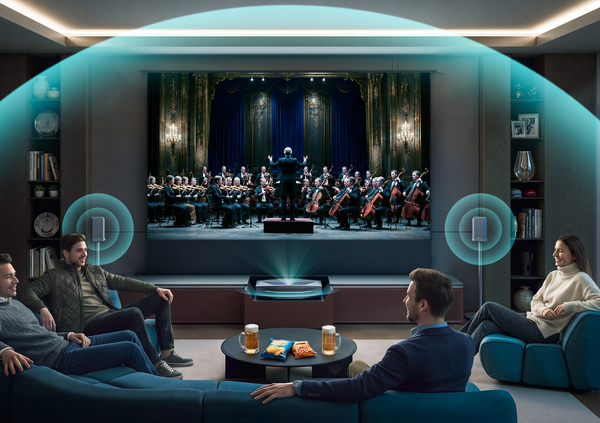
This is the philosophy behind the AWOL Vision Aetherion. Unlike many competitors that force you to choose, the Aetherion includes native support for Dolby Vision, HDR10+, HDR10, HLG, and IMAX Enhanced. Whether you are streaming from Netflix or Amazon, the Aetherion automatically detects the signal and deploys the correct processing engine.
Hardware Matters: You Can't Fake HDR
Supporting the software format is only half the battle. A cheap display can say "Supports Dolby Vision" on the box but lack the hardware to actually display it. For a massive 100-150 inch image, you need three specific hardware capabilities.
1. High Brightness (Lumens)
HDR is about light volume. If a projector is too dim, the "High Dynamic Range" gets compressed, and colors look muddy.
- The Requirement: The Aetherion Max is rated at 3,300 ISO Lumens (Aetherion Pro: 2,600 ISO Lumens), utilizing an RGB Pure Triple Laser light source. This provides the necessary "headroom" for HDR highlights to sparkle, even on a massive screen.
- Reference: Nits vs. Lumens
2. Native Contrast & Tone Mapping
To see detail in dark scenes, your projector needs to manage light effectively.
- The Noirscene™ System: The Aetherion boasts a 6,000:1 Native Contrast ratio. Combined with its Noirscene™ System II (which uses a 7-level iris and laser dimming), it creates the contrast separation required for HDR colors to pop without washing out the image.
- Reference: Projector Contrast Ratio Explained
3. Lens Sharpness
4K HDR content is incredibly dense with data. If your lens is soft, that data is lost.
- PixelLock™ Technology: The Aetherion uses an F2.0 Aperture Glass Lens with PixelLock™ technology. This maintains congruent pixel alignment, ensuring that the micro-details in an HDR image stay razor-sharp from corner to corner.
Gaming and IMAX: The New Frontiers
Dolby Vision for Gaming
Gamers on Xbox Series X can utilize Dolby Vision for Gaming, which brings cinema-quality dynamic range to video games. However, projectors have historically been too slow for this.
- The Upgrade: The Aetherion supports VRR (Variable Refresh Rate) and ALLM (Auto Low Latency Mode). It delivers 1ms-class input latency at 240 Hz, bridging the gap between cinema visuals and competitive gaming speed.
- Reference: Are Projectors Good for Gaming?
IMAX Enhanced
- The Definition: IMAX Enhanced is a certification program from IMAX and DTS that pairs IMAX-enhanced masters with certified playback devices. Select titles can use an expanded aspect ratio (often ~1.90:1) to show more picture area, and supported systems may deliver DTS:X immersive audio.
- Compatibility: The Aetherion is fully certified for IMAX Enhanced content.
- Reference: Home Theater IMAX Experience
Summary: Choosing the Best 4K UST Projector
The "Format War" is confusing, but your choice of hardware doesn't have to be. When investing in a premium Ultra Short Throw projector, you should demand a device that refuses to compromise.
Your Final Checklist:
- Universal Support: Does it support both Dolby Vision and HDR10+ so you aren't locked out of content?
- Hardware Power: Does it have the lumens (3000+) and native contrast (6000:1) to actually display HDR properly?
- Gaming Readiness: Does it offer VRR and low latency for HDR gaming?
The AWOL Vision Aetherion checks every box, ensuring that no matter what you watch—or play—you are seeing the creator's true vision.
FAQ: Common HDR Questions
Can I watch Dolby Vision content on an HDR10 projector?
Yes, but the system will "downgrade" the signal to the standard HDR10 layer. You will still get a 4K HDR picture, but you lose the scene-by-scene dynamic optimization.
Is HDR10+ better than Dolby Vision?
Technically, they are very similar as both use dynamic metadata. Dolby Vision is currently supported by more streaming apps and Blu-ray discs, but having a device that supports both (like the Aetherion) is the safest bet.
Does the Aetherion support 3D?
Yes. The Aetherion supports active shutter 3D, and its high brightness makes it an excellent choice for 3D viewing, which can often look dim on standard projectors.
Be the First to Know
Subscribe for special deals, news, and important product information, and get your exclusive $100 discount.
Related Articles

7 Basement Home Theater Ideas with a Style of Their Own

Projector Screen Paint: Is It Worth Painting Your Wall?
A Projector in an Apartment: Make Room for the Screen, Not a Theater

Small Man Cave Ideas: 10 Activity-Based Setups for Limited Space
Frame TV Alternative: A Smarter Vision for the Living Room