
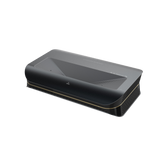





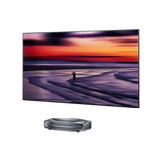
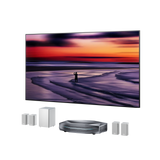


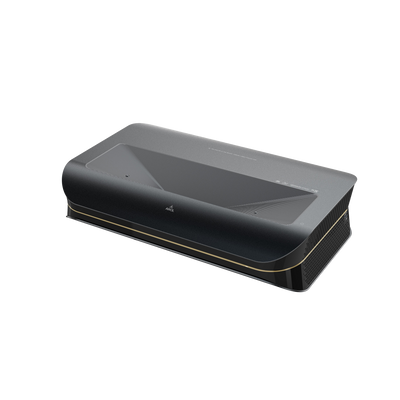




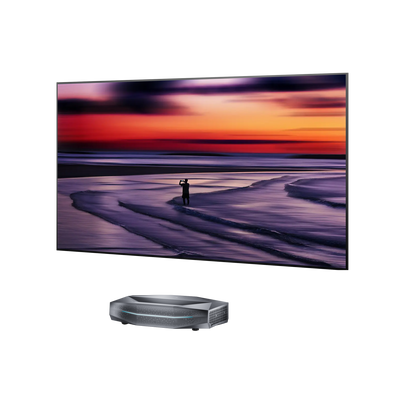
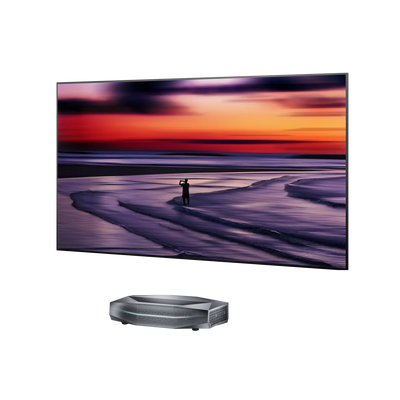
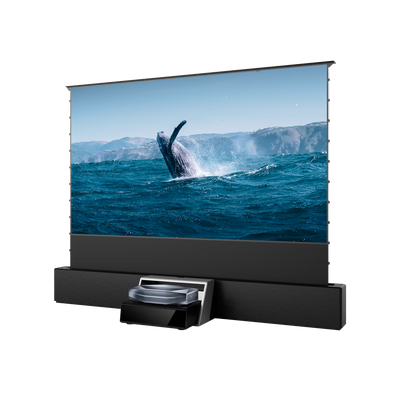
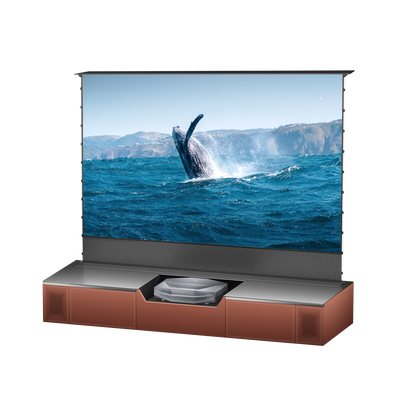
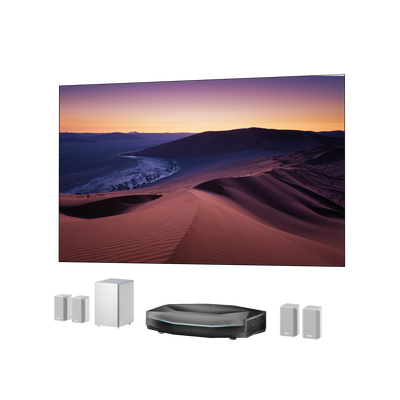


LTV-3500 Pro vs. Aetherion for Home Cinema Experience
3300 ISO Lumens, 6000:1 Native Contrast, VRR + 1ms Latency
Explore Aetherion Max NowFor years, the LTV-3500 Pro has been a centerpiece in home theaters worldwide, delivering the massive, bright 150-inch experience that traditional TV screens simply can't match. It established itself as a powerful solution for those seeking true big-screen immersion in their living rooms.
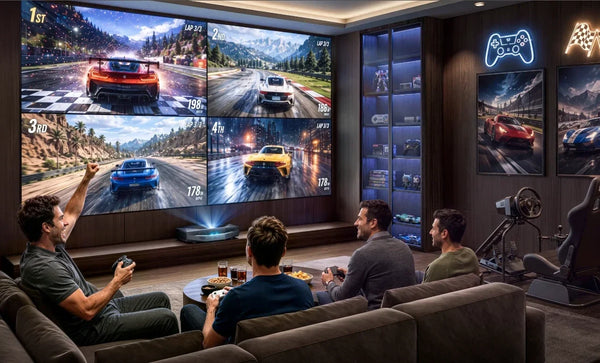
However, the definition of a "perfect home theater" continues to evolve. Modern entertainment isn't just about size and brightness anymore; it's about the nuance of deep shadows in a 4K HDR movie, the split-second response time needed for next-gen gaming, and the seamless integration of smart technology into our daily lives.
The Aetherion Series represents the next chapter in this evolution. Building upon the strong foundation of our RGB Pure Triple Laser technology, Aetherion introduces significant advancements in contrast, processing power, and connectivity. It is designed not just to project an image, but to serve as a comprehensive media hub that meets the diverse, high-performance demands of today's cinema enthusiasts and gamers alike.
Below, we break down the specific technical differences to help you understand how these changes translate to your viewing experience.
1. Contrast & Optics: The Most Significant Shift
The most distinct difference between the two generations lies in the optical engine and contrast performance.
- LTV-3500 Pro: 1,500:1 Native Contrast.
- Aetherion Series: 6,000:1 Native Contrast.
The Technical Difference:
While the LTV-3500 Pro excels in bright rooms, its native contrast is typical of standard DLP projectors. The Aetherion achieves a 4x increase in native contrast by integrating a Physical Lens IRIS and a new Zero-Light Leakage Lens. (Learn more about why this matters: The Critical Role of Contrast in Image Quality)
Real-World Impact:
For casual viewing in a living room with ambient light, both projectors perform well. However, in a dedicated home theater or dark room, the Aetherion’s capability to render deeper blacks is noticeably superior. It reduces the "gray floor" in dark scenes, providing a picture depth and dimensionality that is critical for serious movie watching.
2. Brightness: Clarifying the Standards (ISO Lumens)
To ensure an apples-to-apples comparison, we are using the ISO Lumen standard for all models, which is the current industry requirement for accuracy.
- LTV-3500 Pro: 3,000 ISO Lumens.
- Aetherion Max: 3,300 ISO Lumens.
- Aetherion Pro: 2,600 ISO Lumens.
The Verdict:
The Aetherion Max is now the brightest option in our lineup, surpassing the LTV-3500 Pro by approximately 10%. If your primary usage is in a living room with uncontrolled daylight, the Aetherion Max offers the highest headroom for maintaining image visibility. The Aetherion Pro, while less bright than the Max and the 3500 Pro, is optimized for light-controlled environments where pure brightness is secondary to contrast and color accuracy.
3. Connectivity & Gaming: Updating to 2026 Standards
The LTV-3500 Pro was designed during the HDMI 2.0 era. The Aetherion is engineered for the HDMI 2.1 era.
|
Feature |
LTV-3500 Pro |
Aetherion Series |
Why It Matters |
|
HDMI Version |
HDMI 2.0b |
HDMI 2.1 (3 Ports) |
Required for next-gen console bandwidth (4K/120Hz). (Deep Dive: HDMI 2.0 vs 2.1 for Home Theater) |
|
Input Lag |
8ms |
1ms |
Near-instant response time for competitive gaming. (Read: Input Lag vs. Response Time) |
|
VRR |
No |
Yes (Variable Refresh Rate) |
Eliminates screen tearing and stuttering. |
|
ALLM |
No |
Yes |
Automatically switches the projector to Game Mode. (What is this? ALLM Explained) |
If you use your projector primarily for movies, the LTV-3500 Pro’s 8ms lag is still excellent. However, for owners of a PS5, Xbox Series X, or high-end Gaming PC, the addition of VRR and 1ms latency on the Aetherion represents a fundamental hardware upgrade, matching the performance metrics of dedicated gaming monitors.
(See our dedicated gaming analysis: Cinematic Gaming Done Right)
4. Hardware Architecture: Processing Power
As streaming apps and operating systems become more resource-intensive, internal processing power dictates the longevity of the device.
- Chipset: The Aetherion upgrades from the MT9669 to the flagship MT9655 SoC.
- RAM: Increased from 3GB to 8GB.
- Connectivity: Upgraded from WiFi 5 to WiFi 7.
User Benefit:
The significant increase in RAM (from 3GB to 8GB) ensures smoother system navigation, faster app loading, and better multitasking capabilities. The jump to WiFi 7 and 1000Mbps Ethernet future-proofs the device for high-bitrate local network streaming (e.g., Plex servers) and ensures stability for cloud gaming services.
5. Installation & Audio
Throw Ratio & Form Factor:
- LTV-3500 Pro: 0.25:1 Throw Ratio.
- Aetherion: 0.2:1 Throw Ratio.
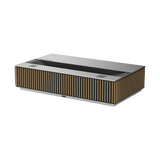
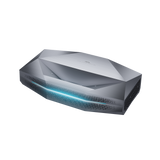
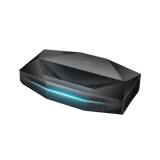
The improved throw ratio on the Aetherion allows the unit to be placed closer to the wall to achieve the same screen size. Combined with a significantly smaller chassis (approx. 20% lighter), the Aetherion is easier to fit on standard depth TV cabinets and integrates more discreetly into your living space. (Guide: What is Short Throw vs. UST?)
Audio Architecture:
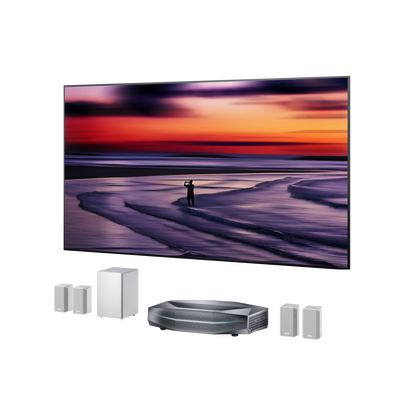
The LTV-3500 Pro features a well-regarded Stereo system. The Aetherion introduces a new audio architecture with a dedicated Central Channel. In home theater setups, a center channel is critical for anchoring dialogue to the screen, improving speech intelligibility during action-heavy sequences without needing to raise the overall volume. (Related: Is Dolby Atmos Worth It?)
Summary: Should You Upgrade?
The LTV-3500 Pro remains a high-performance device, particularly for existing owners who prioritize 3D content and bright-room viewing.
Consider the Aetherion Series if:
- You prioritize Black Levels: The jump to 6,000:1 native contrast provides a more cinematic image in dark environments.
- You are a Gamer: VRR, ALLM, and 1ms lag are essential features for modern gaming consoles.
- You need a Compact Setup: The 0.2:1 throw ratio offers more flexibility in placement.
- Future-Proofing: With WiFi 7, HDMI 2.1, and 8GB of RAM, the Aetherion is built for the next generation of content.
Comprehensive Specs Comparison: LTV-3500 Pro vs. Aetherion
Here is the complete side-by-side technical breakdown of the LTV-3500 Pro versus the new Aetherion models.
|
Specification |
LTV-3500 Pro |
Aetherion Max |
Aetherion Pro |
|
Dimensions |
23.6 x 13.9 x 5.7 inches |
22.1 x 12.7 x 5.5 inches |
22.1 x 12.7 x 5.5 inches |
|
Weight |
23.8 lbs (10.8 kg) |
19.3 lbs (8.75 kg) |
19.3 lbs (8.75 kg) |
|
Color |
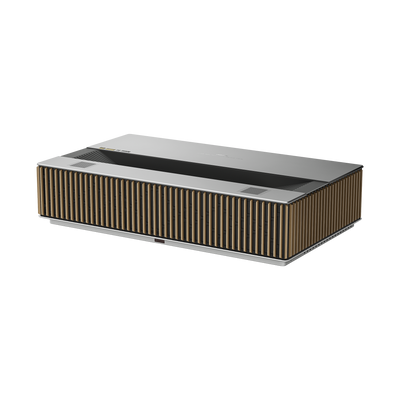
Gray |
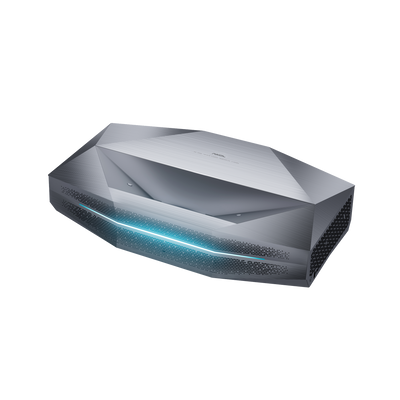
Dark Gunmetal |
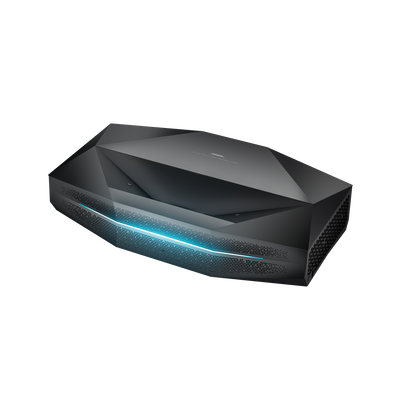
Matte Black |
|
Light Source |
RGB Pure Triple Laser |
RGB Pure Triple Laser |
RGB Pure Triple Laser |
|
Brightness |
3000 ISO Lumens |
3300 ISO Lumens |
2600 ISO Lumens |
|
Native Contrast |
1,500:1 |
6,000:1 (w/ Iris) |
6,000:1 (w/ Iris) |
|
Viewing Contrast (EBL) |
3,000:1 |
60,000:1 |
60,000:1 |
|
Color Range |
107% BT.2020 |
110% BT.2020 |
110% BT.2020 |
|
Display Technology |
TI 0.47" DMD |
0.47" DMD (New TI DLPC8445) |
0.47" DMD (New TI DLPC8445) |
|
Lens |
Standard |
Zero-Light Leakage Lens |
Zero-Light Leakage Lens |
|
Input Lag |
8ms |
1ms |
1ms |
|
HDMI Version |
HDMI 2.0b |
HDMI 2.1 |
HDMI 2.1 |
|
VRR |
No |
Yes |
Yes |
|
ALLM |
No |
Yes |
Yes |
|
Frame Rates |
24/60 Hz |
24/48/50/60 Hz + High Refresh |
24/48/50/60 Hz + High Refresh |
|
SoC Chipset |
MT9669 |
Flagship MT9655 |
Flagship MT9655 |
|
RAM |
3GB |
8GB |
8GB |
|
Storage |
128GB |
128GB |
128GB |
|
Connectivity |
WiFi 5 / BT 5.2 |
WiFi 7 / BT 5.4 |
WiFi 7 / BT 5.4 |
|
Ethernet Speed |
100Mbps |
1000Mbps |
1000Mbps |
|
Throw Ratio |
0.25:1 |
0.2:1 |
0.2:1 |
|
Projection Size |
80 - 150 inches |
80 - 200 inches |
80 - 200 inches |
|
Lens Cover |
Motorized |
Motorized |
Motorized |
|
Central Channel |
No |
Yes |
Yes |
|
Power |
36W Stereo |
(Integrated System) |
(Integrated System) |
|
Formats |
Dolby Atmos / DTS Virtual:X |
Dolby Atmos / DTS Virtual:X |
Dolby Atmos / DTS Virtual:X |
|
Formats |
HDR10 / HLG / HDR10+ |
HDR10 / HLG / HDR10+ |
HDR10 / HLG / HDR10+ |
|
Dolby Vision |
Yes |
Yes |
Yes |
|
IMAX Enhanced |
No |
Yes |
Yes |
Be the First to Know
Subscribe for special deals, news, and important product information, and get your exclusive $100 discount.
Related Articles
Playing PS4 on a Projector: Setup, Settings, and Better Gaming
7 Basement Home Theater Ideas with a Style of Their Own
Projector Screen Paint: Is It Worth Painting Your Wall?
Upgrade Your UST Setup: Is AWOL LuxVision Right for Your Room?
A Projector in an Apartment: Make Room for the Screen, Not a Theater