

















Home Theater Acoustic Treatment: How to Fix Your Room’s Sound
You’ve done the research. You’ve invested in high-performance speakers, a powerful subwoofer, and a stunning visual setup. But when you finally sit down to watch a movie, something feels "off." The dialogue gets lost in action scenes, the bass sounds boomy or uneven, and the overall experience lacks that tight, cinematic punch.
It’s frustrating, but it’s likely not your equipment’s fault. It’s your room.
The room is the most important component in your audio chain. Hard surfaces like drywall, hardwood floors, and glass windows bounce sound waves around, creating echoes and standing waves that muddy the audio. The good news? You don't need to rebuild your house to fix it.
Here is your comprehensive guide to acoustic treatment, focusing on the steps that provide the biggest return on investment.
Target 20-30% Coverage for Balanced Sound
Before you start sticking foam everywhere, you need a concrete plan. We aren't trying to create a "dead" room where your voice sounds weirdly flat. We want a room with controlled reflections.
The Coverage Formula
A common mistake is covering every inch of wall space with absorption. This sucks the life out of the room. Aim to treat 20% to 30% of your wall surface area with acoustic panels. This provides enough absorption to kill flutter echoes while leaving enough bare wall to maintain a natural sense of space.
Soundproofing vs. Acoustic Treatment
Let’s clear up a common confusion so you know what you are aiming for:
- Soundproofing is about isolation—stopping noise from leaving or entering the room (keeping the neighbors happy).
- Acoustic Treatment is about fidelity—making the audio inside the room sound accurate.
This guide focuses primarily on treatment steps, with a final step on isolation.
Step 1: Treat Walls & Ceilings for Reflections
Your walls are the biggest culprits for unwanted reflections. Start your treatment plan here.
Manage Reflections with Acoustic Panels
Sound leaves your speakers and bounces off the walls before hitting your ears. These are called First Reflection Points, and they blur the stereo image and clarity.
- How to find them: Sit in your listening spot and have a friend slide a mirror along the side wall. Wherever you can see the speaker in the mirror, mark that spot.
- The Fix: Install acoustic panels at these points. You can use acoustic foam, but fabric-wrapped fiberglass panels generally offer better broadband absorption and look more professional.
Don't Forget the Screen Wall

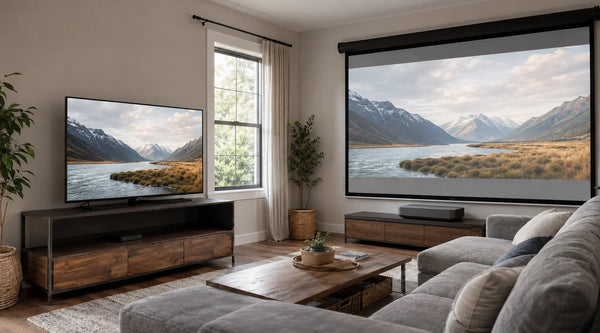
The front wall is often dominated by your screen. A standard projection screen or large TV is a giant reflective surface. If you are using a projection setup, choosing the right material is critical.
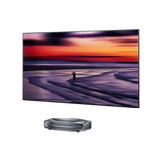
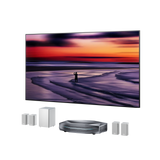
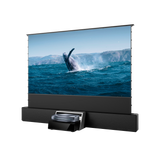
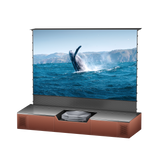
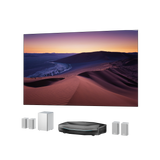
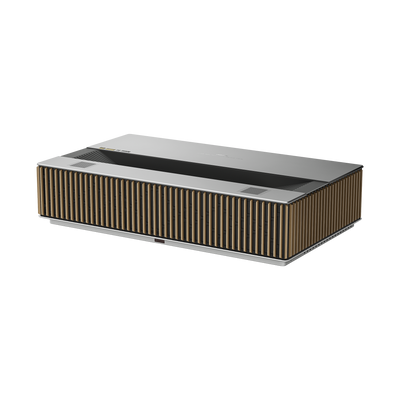
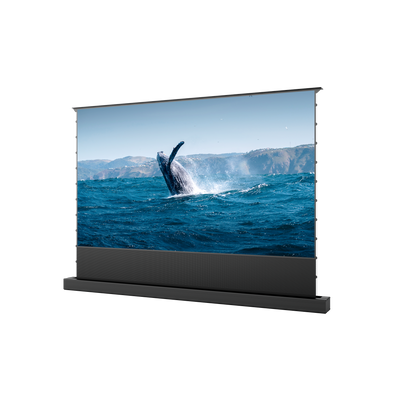
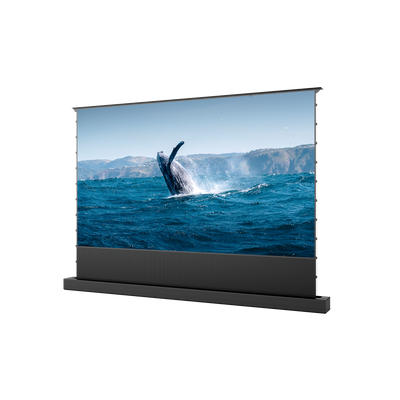
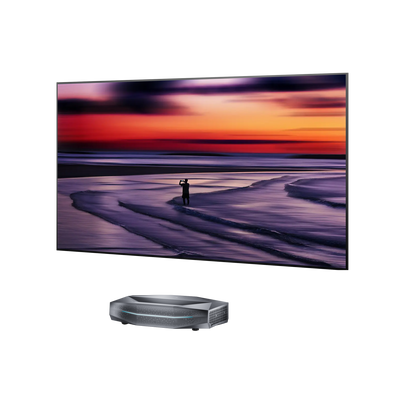
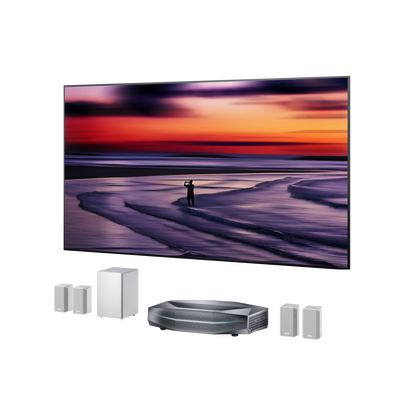
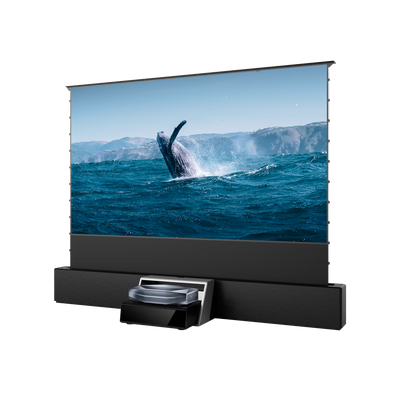
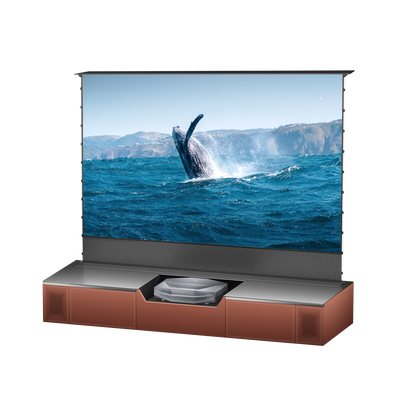
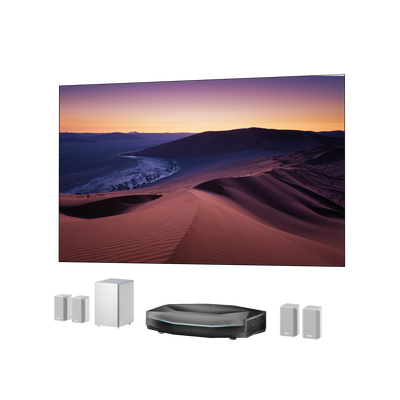
- Pro Tip: A modern setup, such as an AWOL Vision UST projector, is best paired with a Cinematic Acoustic ALR screen. This specialized screen allows sound to pass through the material rather than bouncing off it. This is especially critical if you plan to place speakers behind the projector screen, keeping your dialogue anchored to the image without creating an acoustic "hard wall" at the front of the room.
Tame the Low End with Bass Traps
Bass frequencies are long and powerful. They tend to gather in corners, causing the room to rumble or boom unevenly.
- The Fix: Place Bass Traps in the corners of the room. These are thicker and denser than standard wall panels.
- Alternative: If commercial bass traps don't fit your aesthetic, you can use heavy, rubber-backed carpet "curtains" gathered in the corners to help break up low-frequency buildup.
Use Diffusion to Keep the Room "Alive"
Once you have absorbed the echo, you might need diffusion. Diffusers are uneven panels (often wood or plastic) that scatter sound waves in many directions rather than absorbing them. This makes the room sound "larger" and more evenly balanced. Place these on the rear wall behind your listening position.
Step 2: Optimize Floors to Control High Frequencies
Hardwood, tile, and laminate are beautiful, but they are acoustic mirrors. Treating the floor is often the single biggest upgrade you can make.
Carpet & Underlay Strategy
If you have the option, wall-to-wall carpeting is excellent for home theaters.
- The Material: Look for thick, cut-pile wool carpets. The fibers are excellent at breaking up high-frequency energy.
- The Secret Weapon: The carpet pad (underlay) matters just as much as the carpet. Use a dense, quality underlay to maximize sound absorption.
Avoiding the "Over-Deadening" Trap
Be aware that carpet is great at absorbing high frequencies (treble), but it does almost nothing for bass. If you have thick carpet and too many wall panels, your room might sound "muddy" (lots of bass, no treble). If you have heavy carpet, you may need slightly less absorption on the walls—focus on diffusion instead to maintain balance.
Step 3: Use Furniture & Decor as Natural Absorbers
You don’t always need specialized audiophile gear to improve sound. Your furniture plays a massive role in the final acoustic result.
- Soft Furnishings: A plush, fabric-upholstered couch is a giant bass trap and absorber. Stuffed chairs, pillows, and even large indoor plants help break up sound waves and prevent them from bouncing directly back and forth between parallel walls.
- Window Treatments: Glass windows are highly reflective. Install heavy drapes or thick fabric shades. These not only control light for your projector—crucial for maintaining contrast in HDR content—but also stop high-frequency reflections.
Final Step: Seal Gaps for Sound Isolation
If your goal is to keep the sound inside the theater, you need to seal the air gaps. Sound travels wherever air travels.
- Seal the Door: This is the weakest link. Install weather stripping around the door frame and a heavy rubber door sweep at the bottom. If you can see light coming through the crack, sound is getting out.
- Add Mass: Interior doors are often hollow and vibrate easily. You can add mass to the door by attaching MDF panels or acoustic vinyl to reduce sound transmission.
Summary Checklist
Ready to fix your room? Follow this order of operations:
- Treat the Floor: Add a thick rug or carpet with a dense pad.
- Corner Control: Address bass buildup in the corners with traps.
- First Reflections: Place panels on the side walls where the sound hits first.
- Check the Screen: Ensure your screen surface is acoustically transparent if your speakers are behind it.
- Seal the Gaps: Weather-strip the door to keep the immersion in and the noise out.
By balancing these elements, you’ll transform your home theater from a noisy room into a precision audio environment. If you want to dive deeper into getting the most out of your sound system, check out our guide on maximizing audio quality in home theaters.
FAQs Home Theater Acoustic Treatment
Does acoustic treatment really make a difference?
Yes. In fact, treating your room often provides a bigger upgrade in sound quality than buying new speakers. An untreated room introduces echoes and uneven bass that can make even the most expensive equipment sound muddy. Acoustic treatment reveals the clarity, detail, and impact your speakers are actually capable of producing.
What is the 38% rule in home theater acoustics?
The 38% rule is a guideline for finding the optimal listening position. It suggests that you should place your ears (the listening spot) at 38% of the room's length, measured from either the front or back wall. This spot is theoretically the best compromise to avoid standing waves (peaks and nulls in bass response) that occur at the center or extreme ends of the room.
What is the best flooring for a home theater?
The best flooring for acoustics is wall-to-wall cut-pile wool carpet with a high-density rubber or foam underlay. Hard surfaces like wood, tile, or concrete reflect sound, causing harsh echoes. If you cannot replace hard flooring, covering the area between the speakers and the listener with a thick, plush area rug is a highly effective alternative.
Is soundproofing the same as acoustic treatment?
No. Acoustic treatment improves the sound quality inside the room by controlling reflections and echoes (using panels and bass traps). Soundproofing stops sound from entering or leaving the room (using mass, decoupling, and air sealing). Sticking foam on the walls will not stop your neighbors from hearing your movie; it will only make the movie sound better to you.
How many acoustic panels do I need?
You generally do not need to cover the entire room. For most home theaters, covering 20% to 30% of the wall surface area is the "sweet spot." This balances absorption (killing echo) with enough reflective surface to keep the room sounding natural and lively, rather than uncomfortably "dead."
Be the First to Know
Subscribe for special deals, news, and important product information, and get your exclusive $100 discount.
Related Articles
A Projector in an Apartment: Make Room for the Screen, Not a Theater

Small Man Cave Ideas: 10 Activity-Based Setups for Limited Space
Frame TV Alternative: A Smarter Vision for the Living Room
How to Connect a Speaker to a Projector
Hidden Projector Screen Ideas: How to Make a 120-Inch Screen Disappear