
















What Is Laser Speckle in Projectors & How to Eliminate It
Laser projectors have become a go-to choice for home theaters and professional setups alike, and it's easy to see why. The picture is sharp, the colors pop, and you're not replacing a bulb every year. But if you've ever noticed a faint grainy or glittery texture crawling across bright parts of your image, you're not imagining things. That's laser speckle, and it's more common than most people realize. Here's what's actually causing it, and what you can do about it.
What Is Laser Speckle?
Laser speckle is a visual interference pattern that appears when coherent laser light reflects off or scatters from a surface. It was first studied in the 1960s as physicists began working extensively with laser technology. When laser light — which has a single, highly ordered wavelength — strikes any surface that is rough at the microscopic level, the scattered light waves travel different path lengths and recombine with varying phases. This produces a random pattern of bright and dark spots known as a speckle pattern. In projection, this effect can manifest as a textured or granular overlay on the image, reducing perceived clarity.

What Does a Laser Speckle Pattern Look Like?
Laser speckle typically appears as fine, bright, and dark granular dots distributed across the image. In some viewing conditions, it may also present as a shimmering or softly crawling texture, especially when the viewer or the light source shifts slightly. Speckle is most noticeable in bright, uniform image areas, such as white subtitles, clear skies, or flat color fields, where the eye has less scene detail to focus on, and the interference pattern becomes prominent.
Laser Speckle vs. Speckle Noise
It is important to distinguish laser speckle from ordinary image noise. Standard digital noise originates from electronics, sensor limitations, or video compression artifacts. Laser speckle, by contrast, is a physical optical phenomenon caused by the coherent nature of laser light itself. It exists in the light field before the image is even formed on screen. This distinction matters practically: digital noise reduction algorithms cannot eliminate laser speckle. Solving it requires optical or system-level engineering, not post-processing.

Types of Laser Speckle
Objective Speckle vs. Subjective Speckle
Objective speckle is a property of the light field itself; it can be recorded by a camera or detected on a surface without any human observer involved. Subjective speckle is tied to the individual viewer, shaped by how their eye receives and resolves the incoming light. Because of this, two people sitting in the same room may have noticeably different experiences of how much speckle they see.
Static Speckle vs. Dynamic Speckle
When nothing in the setup is moving, either the projector, the screen, or the optical path, the speckle pattern holds steady. That's static speckle. When any part of the system shifts, the pattern fluctuates, which is dynamic speckle. During long viewing sessions, that fluctuating quality tends to feel more visually tiring than a stable pattern.
Near-Field vs. Far-Field Speckle
Near-field speckle shows up when you're observing very close to the scattering surface, while far-field speckle occurs further out in the propagated beam. Both share the same root cause, but their visual characteristics and granularity shift depending on how far you are from the source of scattering.
Why Is It More Noticeable in Triple-Laser Projection?
Coherent Light and Interference
What sets laser light apart from a standard lamp or LED is coherence: its waves share the same phase and wavelength, moving in near-perfect lockstep. That property is behind the rich color output and sustained brightness that laser projectors are known for. But it's also what makes interference effects significantly stronger. Unlike diffuse, broadband light sources that naturally wash out such patterns, laser light preserves them, making speckle a more present concern.
Rough Surfaces Create Random-Looking Patterns
At a microscopic level, even a purpose-built screen has surface irregularities. When laser light hits those micro-textures, it scatters in countless directions at once. Those scattered waves then meet again, at the screen or at the viewer's eye, having traveled paths of slightly different lengths, which causes them to interfere and produce the characteristic grain. Triple-laser projectors bring exceptional color and output, but that same optical precision means the conditions for speckle are more easily met, especially on surfaces not designed for laser use.
How to Minimize Laser Speckle?
Use a Proper Projection Screen Instead of a Rough Wall
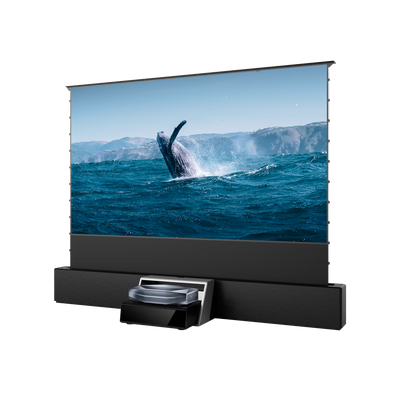
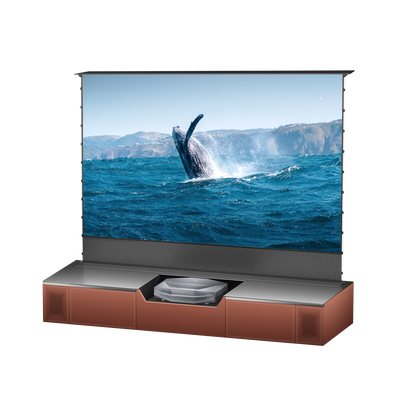
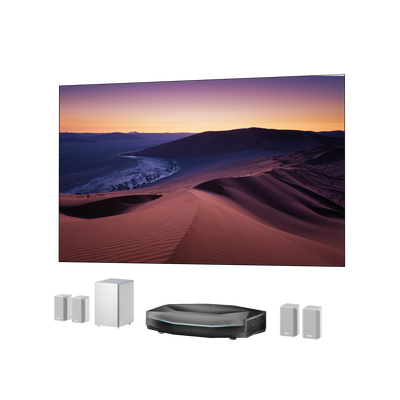
Where you project matters as much as what you project with. Rough walls, bare concrete, uneven paint, and textured surfaces are not optimized for laser projection, which can make the image look less uniform, more grainy, or less controlled. Even if the picture appears bright, an unsuitable surface may make flat areas of the image look more noticeably uneven.
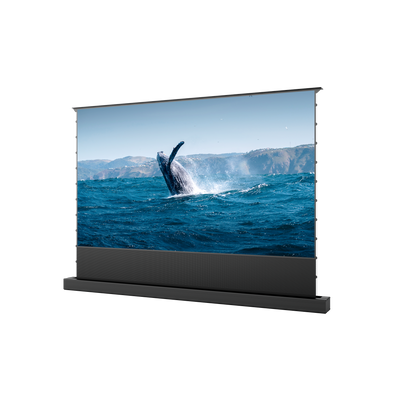
A projection screen designed for laser or ultra short throw projection is a better choice. A controlled screen surface can help manage how light is reflected toward the viewer, improving image uniformity and reducing perceived speckle. This is especially important for RGB laser projectors, where high color purity and strong light output need to be matched with a suitable screen surface.
Choose a Projector with Optical Speckle Suppression
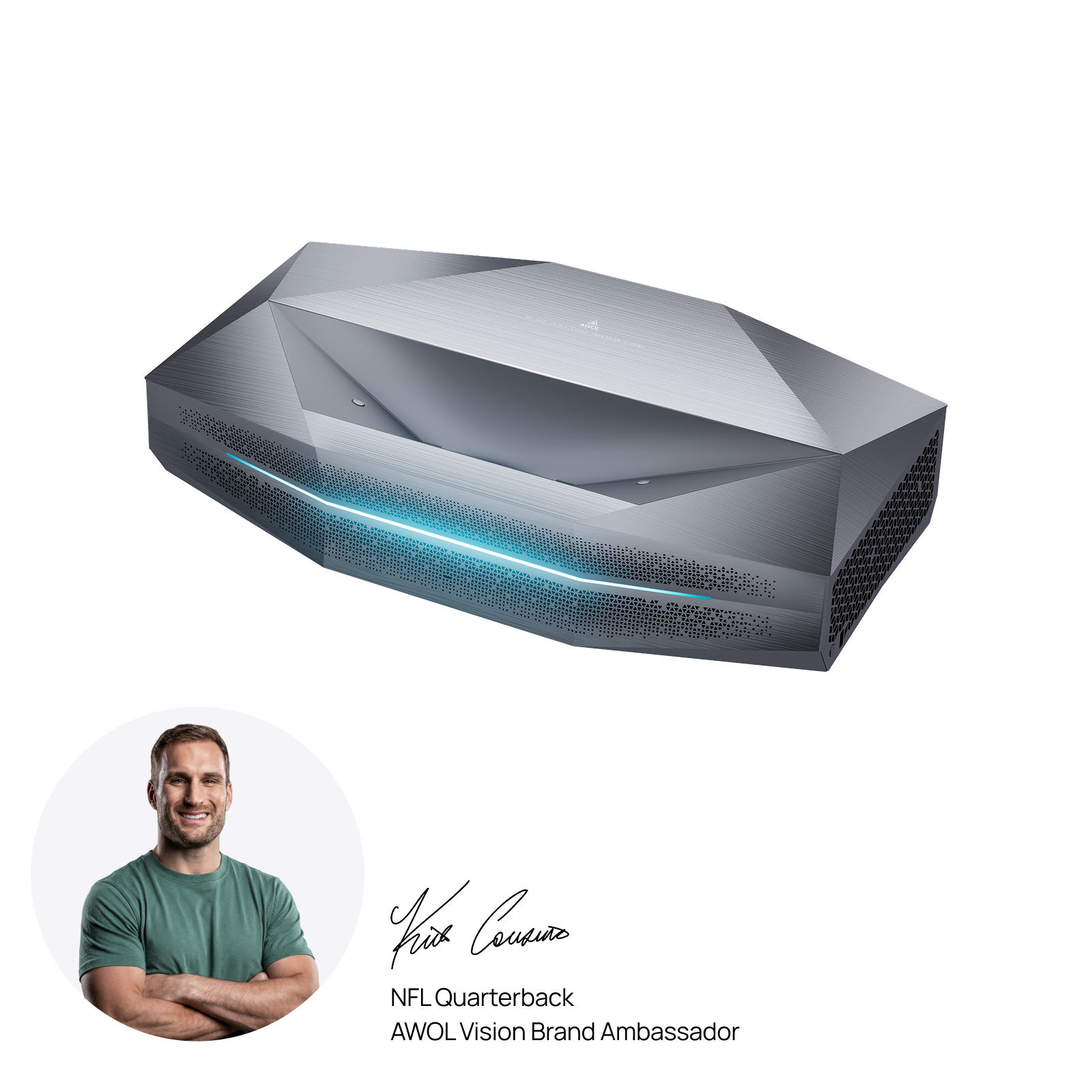
The most effective speckle reduction methods are usually built into the projector’s optical system. Instead of trying to hide the effect with software, engineers reduce speckle by changing how the laser light behaves before it reaches the screen. This may involve de-speckle optical components, diffusion, wavelength diversity, angle diversity, or other optical methods that help break up the interference pattern.
Aetherion addresses laser speckle as a system-level challenge of pure RGB laser projection. Its approach includes projector-side de-speckle optical components, compatible low-speckle screen solutions, and long-term RGB spectrum optimization, helping preserve the color benefits of triple-laser projection while reducing unwanted grain or sparkle.
Optimize Viewing Conditions
Perceived speckle can also be influenced by how and where you watch. Seating distance, viewing angle, and individual eye sensitivity all affect how prominently speckle registers. It tends to be most noticeable in large, bright, flat image areas, such as subtitle text on dark backgrounds, cloudless skies, or uniform walls within a scene, rather than in content with rich detail and texture. Adjusting your seating position or optimizing the throw distance can sometimes help reduce perceptual sensitivity to speckle.
Final Thoughts
Laser speckle is a real optical phenomenon rooted in the physics of coherent light, not a projector defect or a simple calibration issue. It is usually most visible in bright, uniform areas of an image and can be especially noticeable in pure RGB or triple-laser projection systems. While it may not be possible to eliminate speckle completely in every viewing environment, its impact can be significantly reduced with the right combination of screen selection, optimized viewing conditions, and projector-level optical speckle suppression. For anyone choosing a high-performance laser projector, understanding speckle is key to getting the best balance of brightness, color purity, and long-term viewing comfort.
FAQs
What is a laser speckle?
Laser speckle is a grainy, sparkling, or shimmering pattern that can appear when coherent laser light reflects off a projection surface. It is caused by light waves scattering from tiny surface irregularities and interfering with each other. In projector viewing, it is usually most noticeable in bright, flat image areas such as skies, subtitles, snow scenes, or plain backgrounds.
Is laser speckle a projector defect?
No. Laser speckle is not usually a defect or a calibration error. It is an optical characteristic of laser-based projection, especially with pure RGB or triple-laser systems. However, how visible it becomes depends on several factors, including the projector’s optical design, screen material, screen flatness, viewing distance, and individual eye sensitivity.
Why do triple-laser projectors have more laser speckle?
Triple-laser projectors use separate red, green, and blue laser light sources to create wider color performance and higher color purity. Because laser light is more coherent than lamp or LED light, it can produce stronger interference patterns when reflected from a screen. That is why laser speckle may be more noticeable in pure RGB laser projection than in less coherent light-source systems.
Can laser speckle be completely removed?
In most real viewing setups, laser speckle is difficult to remove completely. The more realistic goal is to reduce visible speckle so it becomes much less distracting. Effective reduction usually requires projector-level optical methods, such as de-speckle components, wavelength diversity, angle diversity, or diffusion, combined with a suitable projection screen. Aetherion addresses this through projector-side de-speckle optical components, compatible screen solutions, and long-term RGB spectrum optimization.
Does the projection screen affect laser speckle?
Yes. The screen plays an important role in how visible laser speckle becomes. A rough wall, uneven painted surface, or screen not designed for laser projection may make the image look less uniform or more grainy. A proper laser-compatible or UST projection screen can help control how light is reflected toward the viewer, improving image uniformity and reducing perceived speckle. Recent research also shows that screen properties and surface roughness can strongly influence speckle behavior.
Be the First to Know
Subscribe for special deals, news, and important product information, and get your exclusive $100 discount.
Related Articles

Rec2020 Explained: Color Gamut, HDR and Picture Quality
Projector Says No Signal? How to Find and Fix the Problem
Why Is My Projector Blurry? 8 Causes and the Fixes That Work

Projector Lens Shift Explained: How Much Placement Freedom You Actually Get
Projector Lens Replacement: Can You Replace or Repair the Lens?