













The Ultimate Kid-Friendly Projector Setup: Safety, Screens, and Eye Health
Designing a family media room or a high-end playroom comes with a unique set of challenges. You want a massive, cinematic screen for family movie nights and weekend gaming, but you also have to account for flying toys, sticky hands, and energetic kids running around.
For decades, the default choice was a fragile flat-screen TV or a messy traditional projector. Today, parents are realizing that the ultimate family entertainment hub isn't a TV at all—it's a carefully designed smart projector setup. Here is exactly how to build a space that is safe, beautiful, and easy on developing eyes.
The Anatomy of a Kid-Safe Projector Setup
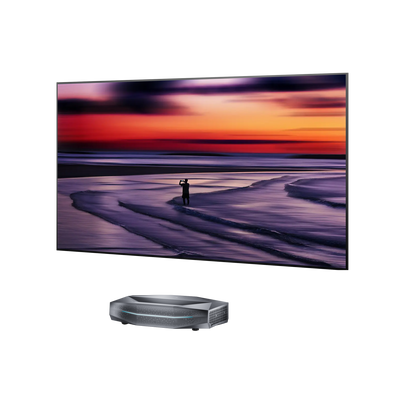
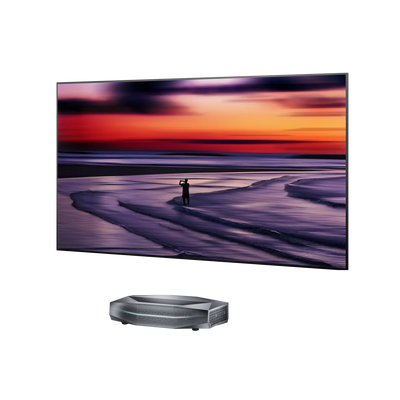
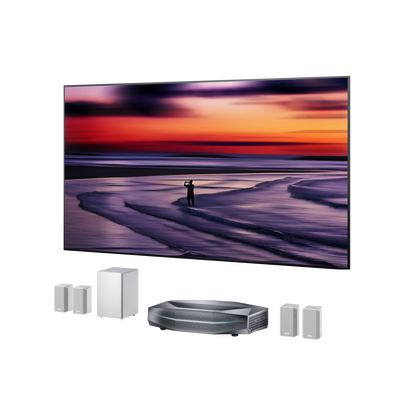
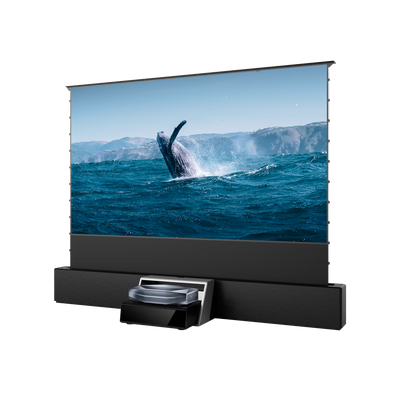
Before diving into the specific technologies, it helps to understand what a modern, family-friendly setup actually looks like. A complete, optimized system relies on three core components working together:
-
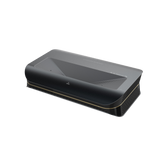
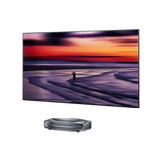
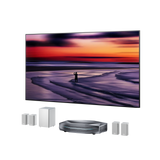
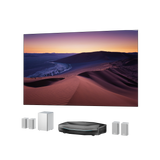
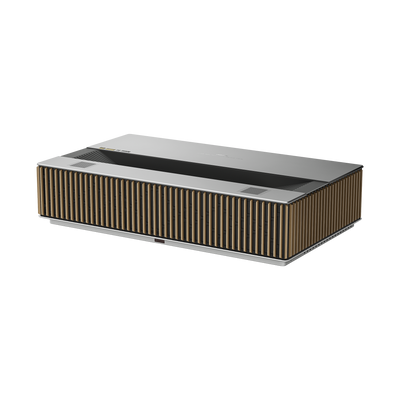
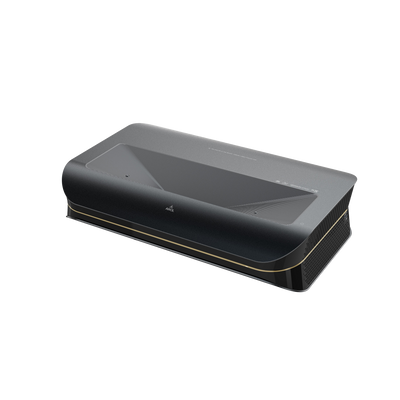
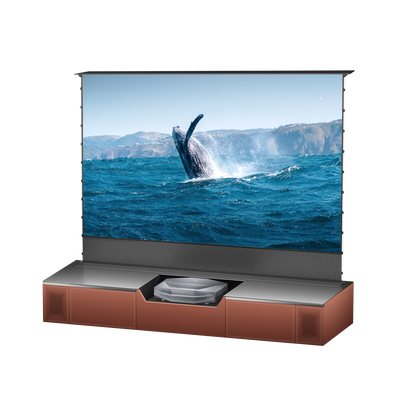
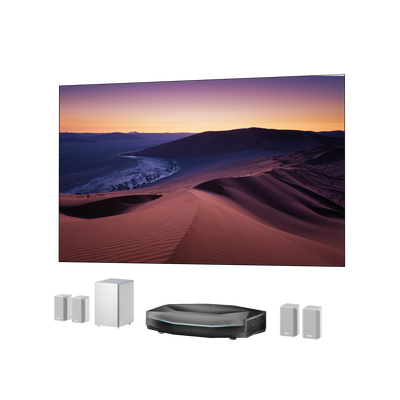
The Display Engine: An Ultra Short Throw (UST) projector that sits safely on a media console against the wall, hiding all wires and eliminating tripping hazards.
-
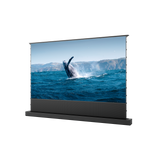
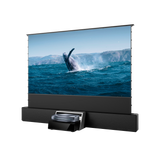
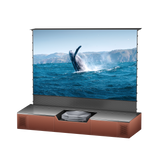
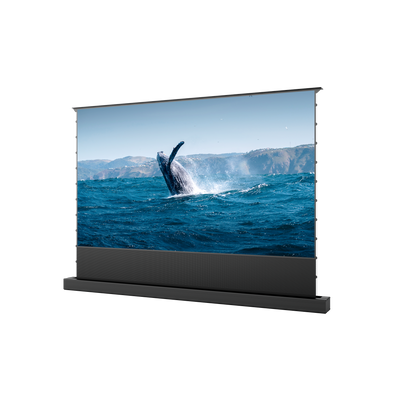
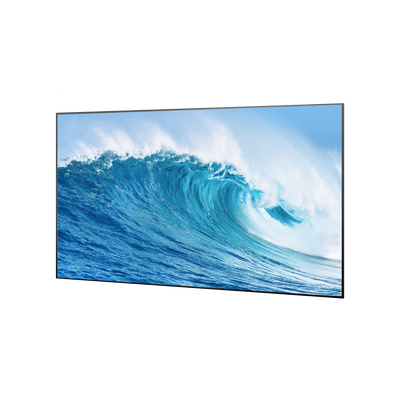
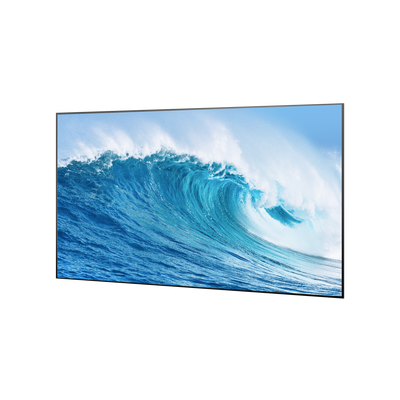
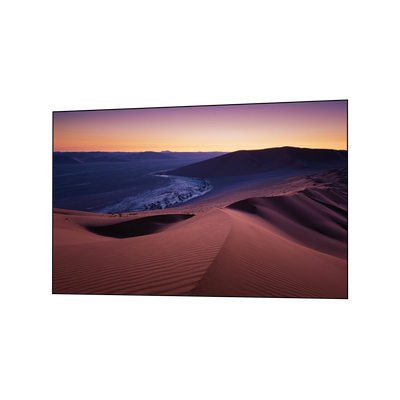
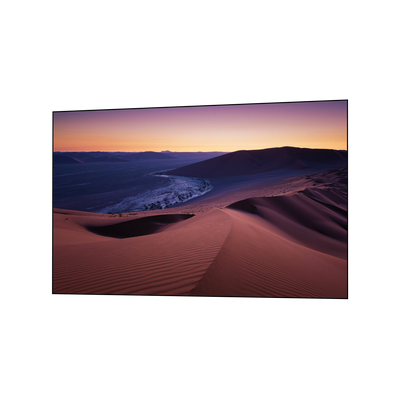
The Canvas: An Ambient Light Rejecting (ALR) screen mounted on the wall to combat daytime sunlight and replace the fragile glass of a TV.
-
The Brain: A built-in operating system (like Google TV) and built-in audio, eliminating the need for extra streaming sticks, messy receivers, and easily lost remotes.
Here is why this specific combination is replacing the traditional living room TV.

Why Traditional TVs and Projectors Fail in Family Rooms
The Fragility of Flat Screens
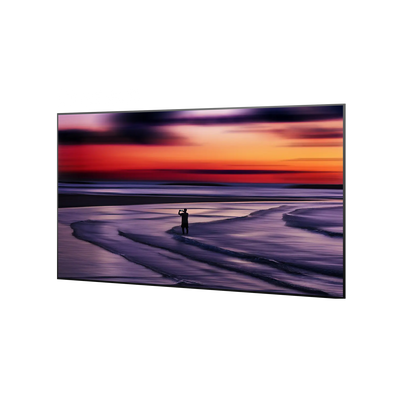
A 100-inch OLED TV is a beautiful piece of technology, but it is essentially a massive pane of delicate glass. A single stray block, a thrown game controller, or an accidental bump can instantly destroy a screen worth thousands of dollars, creating a massive safety hazard in the process.
The Hazards of Traditional Projectors
Older projector setups require mounting the device at the back of the room or placing it on a coffee table. This creates two major safety hazards:
-
Tripping Hazards: Running power and HDMI cords across the floor.
-
Blinding Glare: When kids inevitably walk in front of the lens to look at the screen, they are hit directly in the eyes by a blinding, high-intensity beam of light.
The Core of a Kid-Safe Setup: Ultra Short Throw (UST)
The foundational element of a modern family media room is Ultra Short Throw (UST) technology.
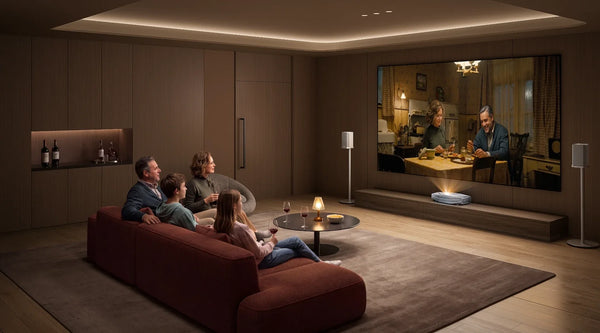
Instead of sitting behind you, a UST projector sits on a standard media console flush against the wall, projecting the image sharply upward. This completely eliminates cables running across the floor and prevents anyone from casting shadows on the screen when they walk by.
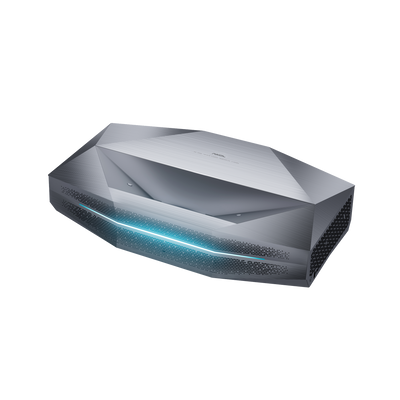
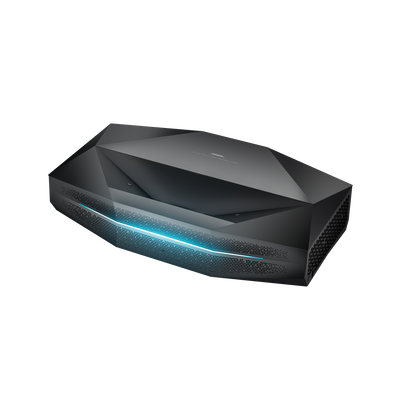
Safety is paramount in a home with toddlers. When setting up a premium family space, look for devices engineered with safety features built-in. For example, the AWOL Vision Aetherion not only sits safely out of the way on your console, but it features a specialized zero-light leakage lens. This means that if a curious child stands next to the projector, they aren't exposed to stray, harsh light glare from the sides of the machine.
Protecting Developing Eyes: Reflected Light vs. Blue Light

One of the primary reasons parents choose a projector to replace a TV is eye health.
Televisions emit direct, artificial light straight into the viewer's eyes. During long movie marathons or gaming sessions, this direct blue light contributes heavily to digital eye strain and sleep disruption.
Projectors work differently. They bounce light off a wall or screen first. Because the image you see is comprised of reflected light, it is naturally diffused and significantly gentler on human eyes. (You can dive deeper into the science of how projectors reduce blue light exposure here).
Conquering the Playroom Sun (and Protecting the Screen)
Kids rarely watch TV in a pitch-black, cinema-style room. They play during the day with the curtains open and the lights on. If you project an image onto a bare white wall in a sunlit room, the picture will look washed out and dull.
To combat ambient light, you need two things:
-
High Brightness: Your projector must have a powerful light source. The RGB Pure Triple Laser engine in the AWOL Aetherion Max pushes up to 3300 ISO lumens, cutting through daytime ambient light with ease.
-
An ALR Screen: Pairing your UST projector with an Ambient Light Rejecting (ALR) screen is critical. These screens absorb overhead ceiling lights and window glare, reflecting only the projector's light straight back to the audience.
A Note on Screen Durability and Care
While an ALR screen eliminates the danger of shattered glass in your living room, it is not indestructible. The surface relies on a specialized optical coating. While a soft foam ball bouncing off it won't break it, the screen can be scratched by sharp toys or stained by sticky fingers. You will still need to clean your projector screen gently and teach children that the screen is a "look, don't touch" piece of technology.
Streamlined Gaming and Cartoons
A family setup needs to be effortless to use. You do not want to act as the "IT Support" for your kids every time they want to watch cartoons or play games.
-
Built-in Smart OS: Choose a projector with a native operating system like Google TV (featured on the Aetherion line). This allows your kids to navigate Netflix, Disney+, and YouTube directly with a voice remote, no external streaming sticks required.
-
Gaming Ready: If your kids love gaming, ensure your setup can handle modern consoles without lag. Look for HDMI 2.1 ports, Auto Low Latency Mode (ALLM), and a 1ms input lag. This ensures flawless, real-time response whether they are playing Mario Kart or you are connecting a Nintendo Switch to the projector.
Putting It All Together: The Ultimate Family Hub
Building a kid-friendly entertainment space doesn't mean you have to sacrifice premium quality or settle for cheap toys. By combining a high-brightness UST projector, a dedicated ALR screen, and a smart built-in OS, you can create a massive, cinematic experience that is safe from flying toys, free of tripping hazards, and incredibly gentle on your family's eyes. It is the perfect balance of high-end home theater performance and practical, everyday family living.
FAQ on Kid-Friendly Projector Setup
Is a projector safer than a TV for a kid's playroom?
Yes. A smart projector setup is generally safer because it eliminates the risk of a heavy, fragile glass screen being shattered by a thrown toy. Furthermore, projectors utilize reflected light, which drastically reduces blue light exposure and digital eye strain compared to staring at a direct-lit flat-screen TV.
How do I hide projector wires from my kids?
The easiest way to hide projector wires is to use an Ultra Short Throw (UST) projector. Because it sits directly on a media console pushed flush against the wall, all power and HDMI cables are naturally hidden behind the furniture, eliminating tripping hazards entirely.
Can you use a projector in a playroom during the day?
Yes, provided you have the right setup. You will need a high-brightness projector (ideally a laser projector with 2500+ ISO lumens) paired with an Ambient Light Rejecting (ALR) screen. The ALR screen absorbs sunlight and overhead room lights, allowing the projected image to remain vibrant and clear even in a bright room.
What is the best projector screen for kids?
An Ambient Light Rejecting (ALR) fixed-frame screen is the best choice for a family space. Not only does it allow for daytime viewing, but the tensioned screen material is incredibly durable. Unlike a glass TV, an ALR screen will not shatter if accidentally hit by a toy.
Be the First to Know
Subscribe for special deals, news, and important product information, and get your exclusive $100 discount.
Related Articles
Black Projector Screen: Is It Right for Your Room?
WiFi Projector Buying Guide: Features That Actually Matter
How to Create a Modern Living Room with an Ultra Short Throw Projector Cabinet?
Rear Projection Screen Guide: Best Materials Options
How Many Lumens for an Outdoor Projector?