

















Home Theater Installation Cost: A Complete 2026 Breakdown
Key Takeaways
- Professional home theater installation usually costs $10,000–$60,000.
- A DIY projector-based setup can often be built for $2,500–$6,000.
- Labor is the largest variable, especially for ceiling mounts, in-wall wiring, and speaker installation.
- The easiest way to lower installation cost is to choose equipment that avoids complex installation work.
The most searched question in home theater planning is also the hardest to answer: how much does home theater installation cost? Based on 2026 industry data, the range spans from $2,000 for a basic living room setup to over $100,000 for a custom dedicated theater. This guide breaks down every cost driver — labor rates, component pricing, room prep — and reveals the one technology shift that lets you build a modern home theater setup for a fraction of what traditional installation quotes.
What Does Home Theater Installation Actually Cost?

Home theater installation cost varies widely because no two rooms are the same. Here's the honest snapshot before we dive into components:
|
Setup Type |
Total Cost Range |
|
Basic (TV + soundbar, DIY) |
$1,000 – $3,000 |
|
Mid-range (projector + screen + audio, DIY) |
$2,500 – $6,000 |
|
Professional media room installation |
$10,000 – $30,000 |
|
Custom dedicated home theater |
$25,000 – $60,000+ |
|
Luxury reference-grade cinema room |
$60,000 – $100,000+ |
The key question is not only how much home theater installation costs, but where the money goes.
In most traditional installations, a large part of the budget goes toward labor: ceiling mounts, in-wall wiring, speaker cable routing, electrical work, room preparation, and system calibration. Understanding those cost drivers is the easiest way to see where you can save without cutting the experience itself.
Home Theater Installation Cost Breakdown
1. Labor Cost
Labor is usually the biggest variable in a home theater installation quote. A simple setup may only require equipment placement and cable management. A full theater build may involve AV installers, electricians, carpenters, and calibration specialists.
|
Labor Item |
Typical Cost |
|
Basic setup and equipment placement |
$100–$500 |
|
TV wall mounting |
$165–$900 |
|
Projector ceiling mount and cable run |
$300–$1,500 |
|
In-wall cable concealment |
$73–$438 |
|
System calibration |
$200–$800 |
|
Electrical work or dedicated circuit |
$700–$2,000 |
|
Permits, depending on location |
$150–$1,000 |
This is why two homeowners can buy similar equipment but receive very different installation quotes. The more your system depends on ceiling work, wall access, wired speakers, or electrical changes, the more expensive the project becomes.
2. Display Cost: TV vs. Projector
The display is the center of the home theater experience, and it also affects installation complexity.
|
Display Type |
Equipment Cost |
Installation Cost |
|
75-inch 4K TV |
$800–$2,500 |
$165–$900 |
|
85-inch premium TV |
$2,500–$6,000 |
$200–$900 |
|
Long-throw projector |
$700–$3,000 |
$300–$1,500 |
|
UST laser projector |
$1,500–$5,000 |
$0–$200 |
A large TV is simple, but the cost rises quickly once you move into 85-inch and larger sizes. A projector can deliver a much larger image, especially in the 100-inch to 150-inch range.
Traditional long-throw projectors usually require ceiling mounting, throw-distance planning, HDMI cable routing, and sometimes a new power outlet. These steps add labor cost.
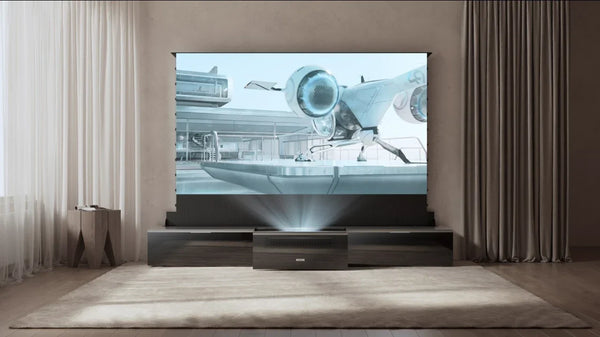
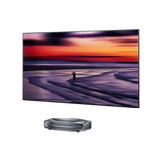
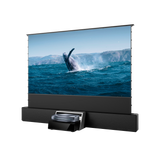
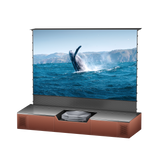
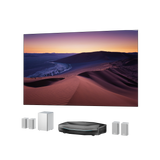
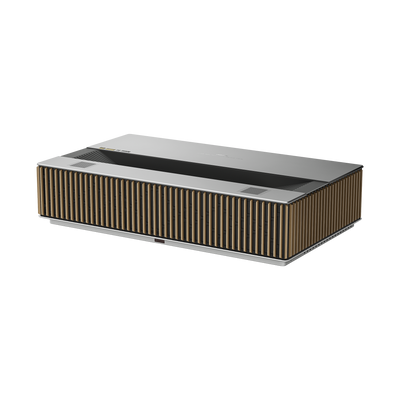
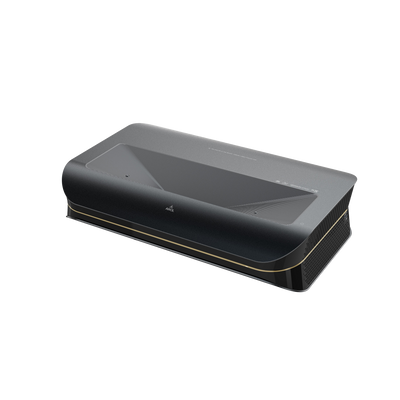
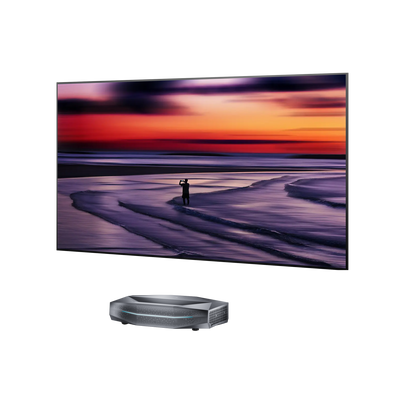
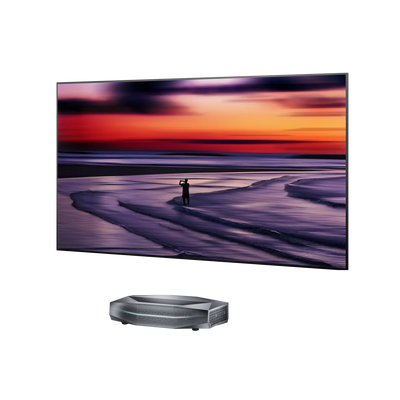
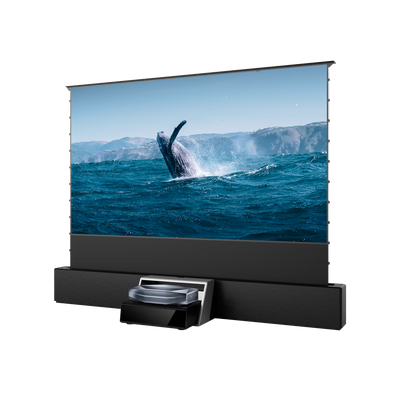
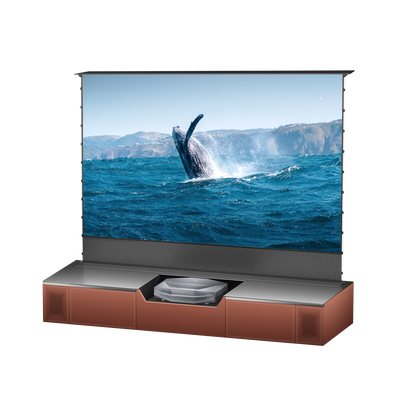
A UST, or ultra short throw, projector simplifies the setup. It sits close to the screen on a console, which helps avoid ceiling mounting, long cable runs, and most overhead installation work.

3. Projection Screen Cost
The screen is often underbudgeted, but it has a major impact on image quality.
|
Screen Type |
Typical Cost |
|
Fixed-frame matte white screen |
$100–$600 |
|
ALR screen |
$400–$1,500 |
|
CLR or UST-specific screen |
$800–$2,500 |
A plain wall may work for casual viewing, but it will not deliver the same contrast, brightness, or color performance as a proper projection screen.
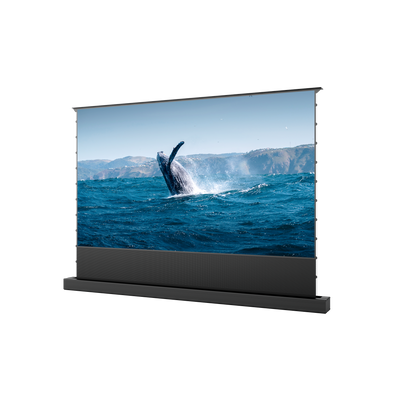
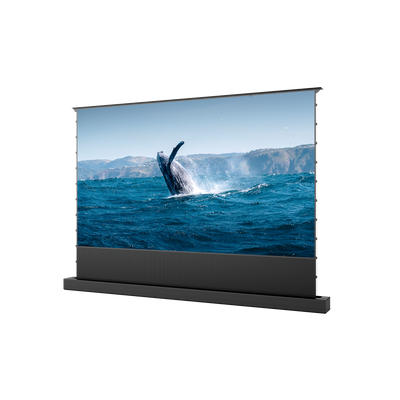
For UST projectors, the screen matters even more. A screen designed for ultra short throw projection helps preserve contrast and reject unwanted ambient light. In a living room, that can be the difference between a washed-out image and a bright, cinematic picture.
4. Audio System Cost
Audio can be simple, or it can become one of the most expensive parts of the installation.
|
Audio Option |
Equipment Cost |
Installation Cost |
|
Soundbar |
$100–$800 |
$0–$150 |
|
Wireless surround system |
$800–$2,500 |
$0–$200 |
|
Wired 5.1 receiver + speakers |
$1,000–$4,000 |
$800–$3,000+ |
|
Dolby Atmos ceiling speaker system |
$2,000–$8,000 |
$1,500–$5,000+ |
A wired surround system can sound excellent, but installation becomes expensive when speaker cables need to be routed around the room or hidden inside walls.
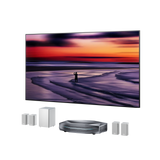
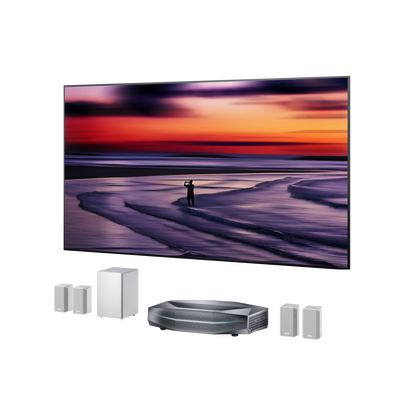
Ceiling speakers add even more cost because they require cutting, wiring, mounting, and often professional labor. Wireless audio reduces this complexity and keeps more of the budget focused on sound quality instead of cable routing.
5. Room Prep and Hidden Costs
Many home theater budgets increase because of room preparation, not because of the projector or speakers.
|
Item |
Typical Cost |
|
Acoustic treatment or soundproofing |
$10–$30 per sq ft |
|
Theater seating |
$500–$20,000 |
|
Smart home or automation integration |
$879–$7,183 |
|
Wall repair or repainting |
Varies by room |
|
Cable management and accessories |
$50–$500 |
|
Surge protection or power conditioning |
$50–$500 |
These costs are common in traditional custom theaters. They are not always necessary for a living room or media room setup. If your goal is a clean, immersive home theater without turning the room into a construction project, reducing room modification is one of the easiest ways to control the budget.

Why Traditional Home Theater Installation Gets Expensive
A traditional home theater often depends on permanent installation work.
That may include:
- Ceiling-mounting a projector
- Running HDMI and power cables overhead
- Installing in-wall or in-ceiling speakers
- Adding new outlets or circuits
- Hiding cables inside walls
- Repairing and repainting surfaces
- Calibrating a complex AV receiver system
These steps can absolutely be worth it for a dedicated custom theater. But they are not always necessary. Remember, the more your equipment depends on construction, the more you pay for labor. The more your equipment is designed for simple placement and wireless connection, the more you can keep your budget focused on picture and sound.
The Smartest Way to Save: Choose No-Hassle Installation
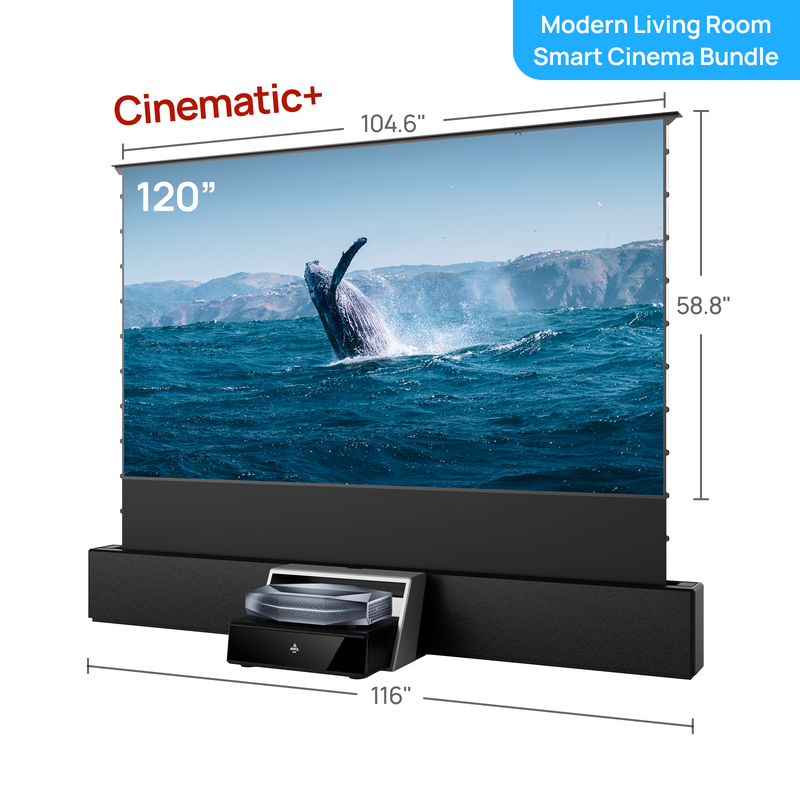
The best way to lower home theater installation cost is not simply buying cheaper equipment. It is choosing a setup that removes the most expensive installation steps. A modern UST-based setup keeps most of the system at the front of the room: the projector sits near the screen, connections stay accessible, and wireless or simplified audio reduces cable routing. That means fewer installers, fewer holes, fewer cables, and fewer surprise costs.
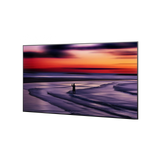
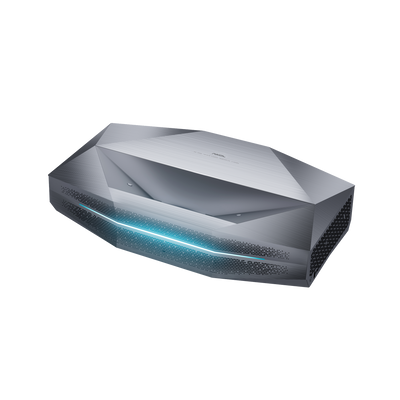
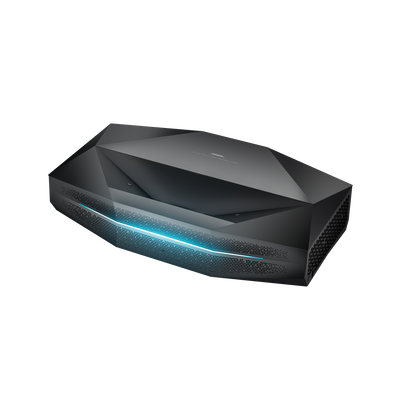
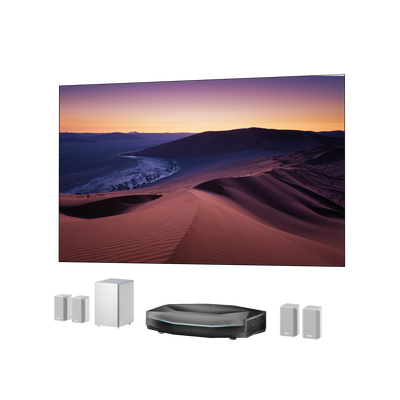
This is the core advantage of AWOL’s home theater ecosystem. For example, with an AWOL Aetherion UST projector, a matched ALR screen, and ThunderBeat wireless audio, homeowners can create a 100-inch to 150-inch cinematic setup without the complexity of a traditional custom build.
Final Word
Home theater installation cost is one number in professional quotes and a completely different number when you understand which costs are truly unavoidable. Labor for in-wall wiring and ceiling mounts is the single largest variable — and with modern UST laser projectors and wireless audio, it can be reduced to zero.
More FAQs For Home Theater Installation Cost
How much does home theater installation cost on average?
Professional home theater installation typically costs $10,000–$60,000, with custom luxury rooms costing more. A DIY projector, screen, and audio setup can often be built for $2,500–$6,000, depending on equipment choices.
What is the biggest cost in home theater installation?
Labor is often the biggest variable. Ceiling mounting, in-wall wiring, electrical work, and speaker cable routing can add thousands of dollars to the final price.
Is a projector cheaper than a large TV?
For very large screen sizes, usually yes. A projector can deliver a 100-inch to 150-inch image at a lower cost than an equivalent large-format TV, though you should also budget for a proper screen.
Is a UST projector cheaper to install?
In many cases, yes. A UST projector sits near the screen, so it can avoid ceiling mounting, long HDMI cable runs, and overhead electrical work.
Can I install a home theater myself?
Yes, if you choose DIY-friendly equipment. A UST projector, matched screen, and wireless audio system can greatly reduce installation complexity. However, electrical work, structural changes, and permanent in-wall wiring should still be handled by professionals.
What is the cheapest way to build a home theater?
The cheapest route is usually a simple TV and soundbar setup. For a larger cinematic experience, a UST projector, proper screen, and wireless audio system can offer a strong balance of screen size, performance, and lower installation cost.
Be the First to Know
Subscribe for special deals, news, and important product information, and get your exclusive $100 discount.
Related Articles
Playing PS4 on a Projector: Setup, Settings, and Better Gaming
7 Basement Home Theater Ideas with a Style of Their Own
Projector Screen Paint: Is It Worth Painting Your Wall?
A Projector in an Apartment: Make Room for the Screen, Not a Theater
Small Man Cave Ideas: 10 Activity-Based Setups for Limited Space