












Guide to The Brightest Projector in 2026
The global projector market is experiencing steady, continued growth, projected to rise from $11.63 billion in 2025 to $12.16 billion in 2026. As more households ditch their traditional televisions for massive, cinematic displays, the demand for daylight-viewable technology has never been higher.
If you are searching for the absolute brightest projector on the market in 2026, let's cut right to the chase. At the extreme high end, specialized 4K home theater projectors currently hit a staggering 10,000 lumens.
However, there is a direct, unavoidable rule in the projector world: raw brightness scales exponentially with price. To achieve that massive 10,000-lumen output for a brightly lit, large-scale environment, you will be looking at an MSRP of around $33,000.
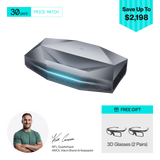
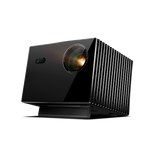
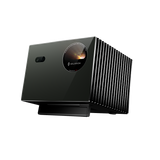
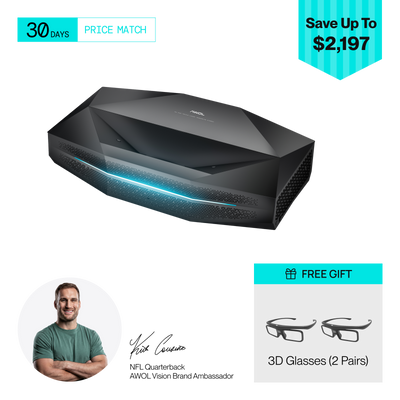
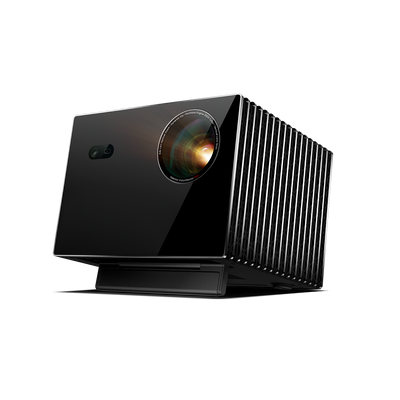
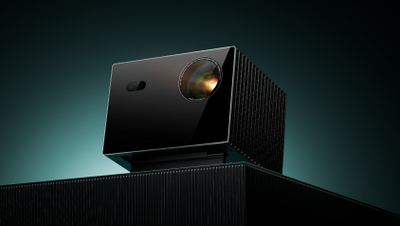
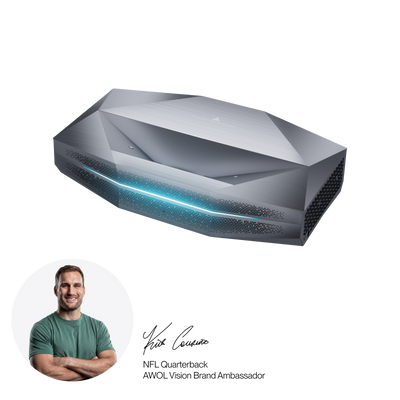
Fortunately, you don't need a commercial budget to get a stunning picture in your living room. For users who want a total TV replacement that thrives in ambient light, the AWOL Vision Aetherion Max is the modern champion. By delivering a massive 3,300 ISO lumens of pure Triple Laser light, it provides elite daylight performance at a fraction of the cost.
The truth is, finding the brightest projector for your specific space isn't about chasing the highest, most expensive number on a spec sheet. It is about understanding the math, avoiding deceptive marketing, utilizing next-generation laser tech, and figuring out the best time to buy a projector. Here is exactly how to decode the jargon and use a projector in daylight without washing out your picture.
How to Measure True Projector Brightness
When shopping for the brightest projector, the first specification you will look for is "lumens." Unfortunately, this is also the most misunderstood metric in the industry.
You might see cheap projectors online boasting massive numbers and find yourself asking: Is 20,000 lumens good for a projector? Or is 30,000 lumens bright? The harsh reality is that a 30,000-lumen home theater projector does not exist. When budget brands claim these astronomical numbers, they are using fake, unregulated metrics like "Lux," "Light Source Lumens," or "LED Lumens." These numbers measure the light trapped inside the machine, not the light that actually hits your screen.
To find the true brightness of a projector, you must look strictly for ISO Lumens or ANSI Lumens. These are rigorously standardized, internationally recognized measurements of the light actually being projected.
- Under 1,000 ISO/ANSI Lumens: Great for pitch-black, dedicated theater rooms.
- 1,500 - 2,000 ISO/ANSI Lumens: Good for rooms with dim lighting or ambient light control.
- 2,500+ ISO/ANSI Lumens: The premium standard required for true living room, daylight viewing.
Expert Tip: Unsure how to spot the difference between real and fake brightness specs? Read our comprehensive guide on ANSI Lumen vs. Lumen to protect yourself from deceptive marketing.
Color Brightness vs. White Brightness: The Triple Laser Advantage

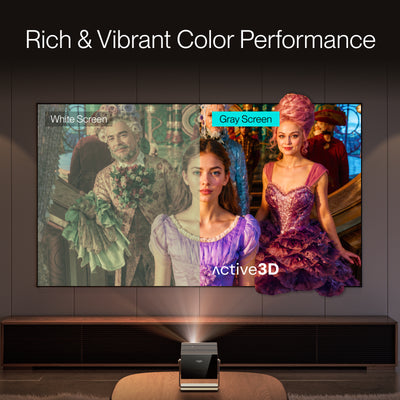
Hitting a high ISO lumen count is only half the battle. Many standard projectors use a traditional color wheel that heavily boosts the white light to hit a high lumen rating, but drastically dims the actual colors. This results in an image that is technically "bright," but looks horribly faded and lifeless.
The brightest premium projectors solve this by utilizing RGB Pure Triple Laser technology.
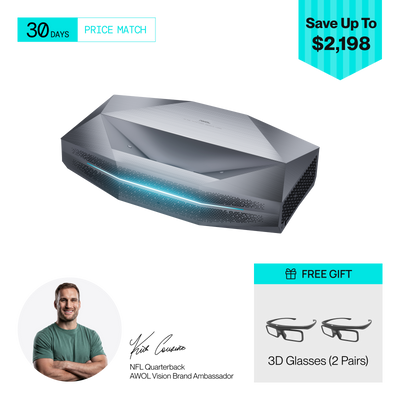
By using three distinct lasers (Red, Green, and Blue), premium models like the AWOL Vision Aetherion ensure that the color brightness perfectly matches the white brightness. The Aetherion Max pushes 3,300 ISO Lumens while achieving 110% of the REC 2020 color space. This means the reds, greens, and blues are just as punchy and vibrant as the pure whites. Furthermore, backed by a native contrast of 6000:1 with a dynamic Iris, the image retains its rich, deep quality even when the midday sun is shining through your windows.
If you are struggling to understand how perceived brightness and color volume interact on your screen, diving into the science of Nits vs. Lumens will give you a clearer picture of what your eyes are actually seeing.
Why You Need an ALR Screen for Bright Projections

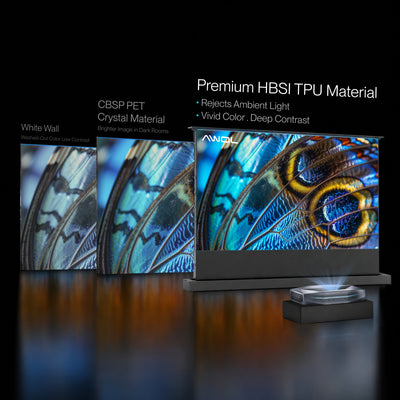
You can buy the absolute brightest projector on the market, but if you point it at a bare white wall or a cheap pull-down sheet in a sunlit room, the image will still wash out. Why? Because a white wall reflects all light equally—including the sunlight from your windows and the overhead lamps in your ceiling.
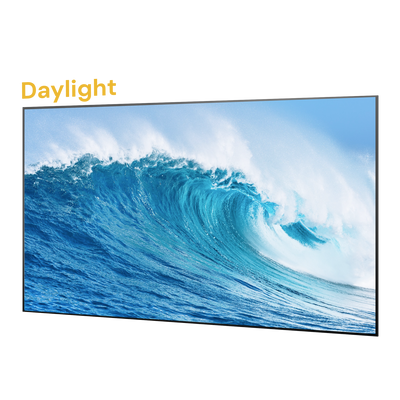
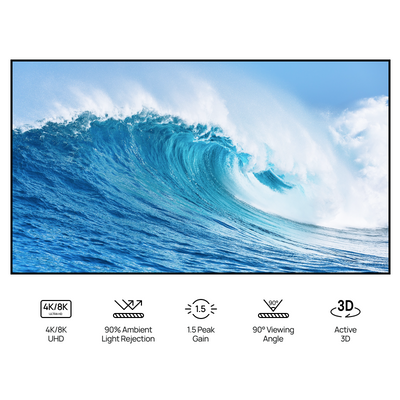
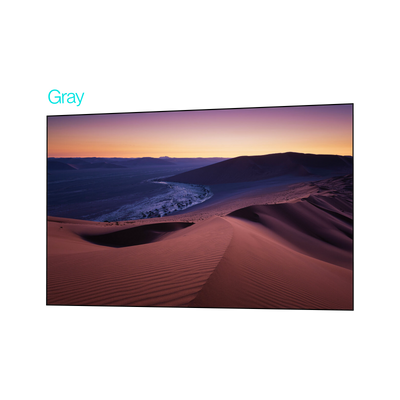
To achieve TV-level brightness during the day, you must pair your high-lumen projector with a dedicated projector screen.
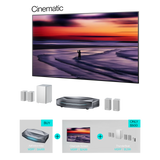
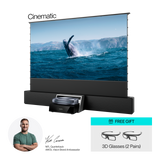
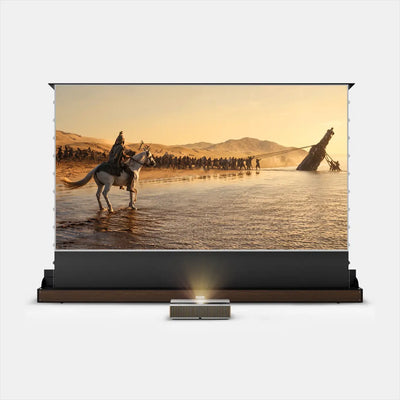
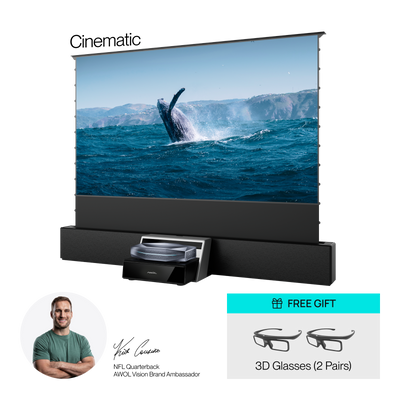
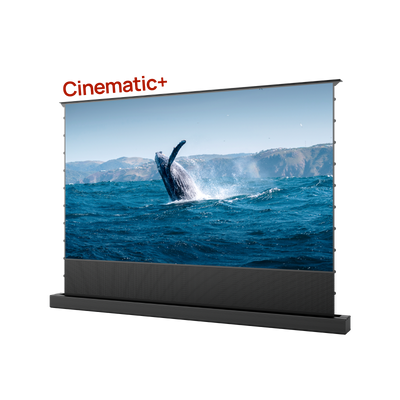
ALR screens are engineered with microscopic structures that only accept light coming from the projector's specific angle (such as the steep 0.2:1 angle of the Aetherion), while absorbing or deflecting light coming from other directions. This preserves the deep black levels and intense bright highlights, making it the non-negotiable secret weapon for daytime viewing.
Finding the Brightest Projector for Your Setup
The "best" bright projector depends entirely on where you plan to put it.
The Brightest Short Throw Projector for Living Rooms
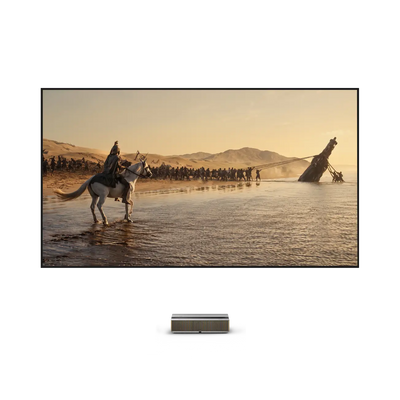
If you want to replace your main television, an Ultra-Short Throw (UST) projector is your best option. Because they sit mere inches away from the wall, the light has less distance to travel, resulting in less brightness lost to the air.
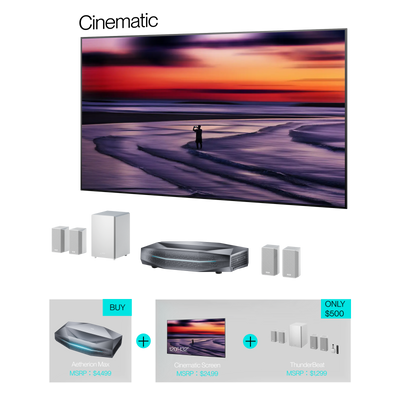
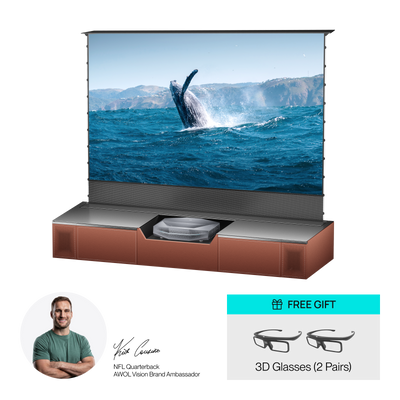
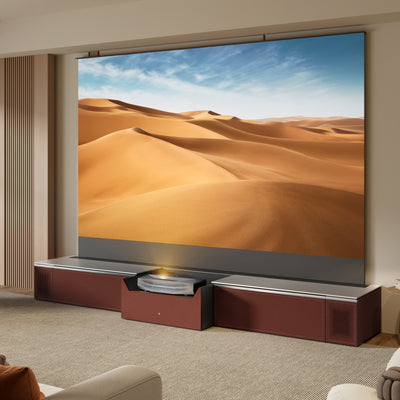
With modern Triple Laser power, you no longer have to ask, "Do you need a dark room for a UST projector?" The AWOL Vision Aetherion ecosystem is built for this exact environment. Between the Aetherion Pro (2,600 ISO Lumens) and the Aetherion Max (3,300 ISO Lumens), you have the raw horsepower required to project a flawless 80 to 200-inch cinematic display with Dolby Vision—no blackout curtains needed.
(For a deeper dive into exact room calculations, see How many lumens does a projector need for daylight?)
The Brightest Outdoor Projector for Backyard Theaters
Taking the movie night outside introduces an entirely new set of ambient light challenges (streetlights, sunset glare, fire pits). For an outdoor setup, you need the raw power of a flagship projector.
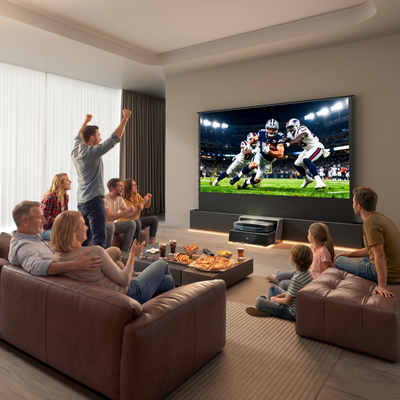
When creating an outdoor home theater in your backyard, prioritizing an ultra-bright laser projector like the Aetherion ensures your sports watch parties and movie nights aren't ruined by the neighbor's porch light or the setting sun.
The Final Takeaway
Finding the brightest projector means looking past bloated marketing metrics and matching verified ISO/ANSI lumens to your specific room conditions and budget. Here is the definitive breakdown of what to look for:
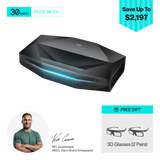
- The Baseline for Bright Living Rooms (2,600 ISO Lumens): To successfully replace a TV in a room with standard ambient light, 2,500+ ISO lumens is the minimum requirement. The AWOL Vision Aetherion Pro delivers 2,600 ISO Lumens of Triple Laser light, hitting the perfect sweet spot for everyday viewing and gaming.
- The Ultimate Daylight Conqueror (3,300 ISO Lumens): If your room has heavy sunlight, open floor plans, or you want a flawless outdoor setup, you need elite power. The AWOL Vision Aetherion Max pushes a massive 3,300 ISO Lumens, ensuring your picture remains vibrant and punchy, even at midday.
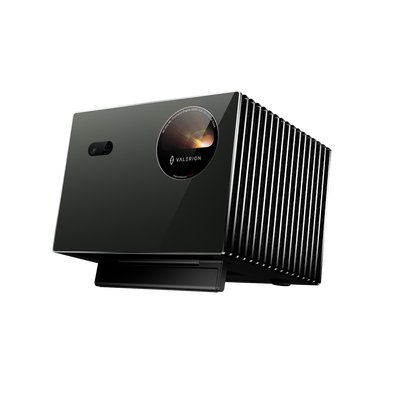
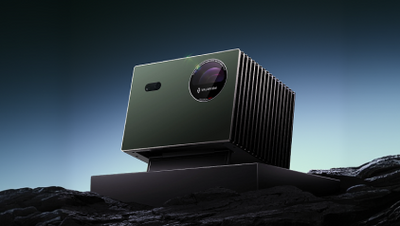
- The Standard-Throw Powerhouse (3,500 ISO Lumens): For those who prefer or require a traditional, long-throw setup but still demand extreme brightness, AWOL's sister brand offers the Valerion VisionMaster Max. Boasting 3,500 ISO Lumens, it delivers exceptional versatility and contrast for dedicated or hybrid cinematic spaces.
Ultimately, by choosing a verified high-lumen model and pairing it with a quality ALR screen, achieving a brilliant, massive picture in any lighting condition is finally a reality.
FAQs on The Brightest Projector
What is the brightest projector you can buy?
At the extreme high end, specialized 4K projectors can reach 10,000 lumens, but these cost roughly $33,000. For premium home theater and living room use, top-tier Triple Laser projectors like the AWOL Vision Aetherion Max deliver 3,300 true ISO Lumens, offering incredible brightness for a fraction of that commercial price.
What are the brightest lumens for a projector?
When looking at spec sheets, you should strictly look for ISO Lumens or ANSI Lumens. For a dedicated dark room, 1,000 to 1,500 ISO lumens is incredibly bright. For a living room with ambient light, the brightest premium models will offer 2,500 to 3,500 ISO Lumens.
Is 20,000 or 30,000 lumens good for a projector?
If you see a home projector advertising 20,000 or 30,000 lumens, it is using fake marketing metrics (like "Lux" or "Light Source Lumens") to trick you. A true 30,000 ANSI lumen projector is the size of a refrigerator and is used for projecting onto the sides of skyscrapers or in massive commercial movie theaters.

Be the First to Know
Subscribe for special deals, news, and important product information, and get your exclusive $50 discount.
Related Articles
Frame TV Alternative: A Smarter Vision for the Living Room
How to Connect a Speaker to a Projector
Hidden Projector Screen Ideas: How to Make a 120-Inch Screen Disappear
How to Connect a Projector to a TV
Basement Theater: How to Turn Your Basement Into a Home Cinema