













Dolby vs. IMAX: What’s the Real Difference
For movie enthusiasts, nothing beats the thrill of experiencing a film on the grandest possible scale. As more people seek immersive cinema experiences, premium formats like Dolby Cinema and IMAX have become the gold standard for blockbuster season. Each format promises to elevate your movie-going adventure — but they do it in very different ways, and for certain films, the difference is dramatic.
Knowing the difference between Dolby and IMAX is essential, especially now that major 2026 releases like Project Hail Mary, The Odyssey, and Avengers: Doomsday are making the choice more consequential than ever.
This guide covers everything: visual and audio quality, comfort, pricing, availability, and — crucially — how to pick the right format for whichever blockbuster you're heading out to see this season.
Dolby Cinema vs. IMAX — How to Choose Right Now
| Feature | Dolby Cinema | IMAX |
|---|---|---|
Visual Technology |
|
|
Aspect Ratio |
|
|
Audio Technology |
|
|
Screen Size |
|
|
Seating |
|
|
Theater Capacity |
|
|
Pricing |
|
|
Ideal For |
|
|
What Is Dolby Cinema?
Dolby Cinema integrates state-of-the-art audio and visual technologies to set a new standard for premium movie experiences. Designed for viewers who crave exceptional quality in both picture and sound, it transforms every film into an immersive sensory experience.
Dolby Vision
At the heart of Dolby Cinema is Dolby Vision, a cutting-edge visual technology that delivers stunning High Dynamic Range (HDR) imaging. The philosophy is simple: darker darks and brighter brights. Dolby Vision boasts a broader color spectrum and deeper contrasts than standard projection, ensuring every scene is rendered with remarkable detail and color accuracy — whether you're watching deep shadows in a tense thriller or blazing explosions in a sci-fi epic.
Dolby Atmos
Complementing Dolby Vision is Dolby Atmos, an advanced audio system that redefines how sound is experienced in the theater. Unlike traditional surround sound systems that assign audio to fixed channels, Dolby Atmos uses object-based audio — allowing sound designers to place individual audio elements anywhere in a three-dimensional space, including directly overhead. The result is a 360° audio field where every whisper, footstep, and explosion feels physically present around you.
Together, Dolby Vision and Dolby Atmos create a seamless cinematic experience that is best described as precision — sharper detail, more accurate color, and sound placement that mirrors how a director intended their film to be heard.
What Is IMAX?
IMAX is synonymous with grand-scale cinema. It originated in the late 1960s with nature documentaries on enormous screens, and has since become the dominant premium format for Hollywood's biggest blockbusters.
IMAX's defining characteristic is its enormous screens, which extend from floor to ceiling and wall to wall. In premium IMAX Laser theaters, a native 1.43:1 aspect ratio is used — significantly taller than a standard cinema screen. This matters enormously for films that are shot for IMAX: the image literally fills more of your peripheral vision, creating a sense of immersion that no other format can match.
Understanding IMAX Projection Types
Not all IMAX screens are created equal. There are three main types:
- IMAX with Laser (4K): The premium tier. Dual 4K projection delivers exceptional brightness, contrast, and sharpness. Supports the full 1.43:1 aspect ratio. This is what most new IMAX theaters use.
- IMAX Digital / Xenon (2K): Older installations using 2K Xenon projectors. Still a large-format premium experience but less bright and sharp than Laser. Supports the 1.90:1 aspect ratio rather than the full 1.43:1 frame.
- IMAX 70mm Film: The rarest and most beloved by purists. Used for select films like The Odyssey, it delivers extraordinary warmth, grain, and depth that digital cannot fully replicate.
Pro tip: When buying tickets, check whether your local IMAX is a Laser or Xenon theater. For a film like Project Hail Mary or The Odyssey, which were shot specifically for the 1.43:1 frame, an IMAX Laser or 70mm print is substantially better than IMAX Digital.
What "Filmed for IMAX" Actually Means
You'll often see studios advertise that a film was "Filmed for IMAX" — but what does that actually mean for your viewing experience?
When a film is natively shot in IMAX's 1.43:1 aspect ratio, the image is physically taller than a standard film frame. In a regular cinema or on a standard screen, the top and bottom of this image are cropped away to fit. In an IMAX theater, you see the full frame — up to 26% more picture than any other format. For visually expansive films where cinematographers deliberately compose for the taller frame (space, landscapes, action), this is a meaningful difference, not a marketing gimmick.
Ultimate Comparison: Dolby Cinema vs. IMAX
Visual Quality
IMAX is famous for its enormous screens and expanded aspect ratios, which physically envelop your field of vision. Dolby Cinema emphasizes superior contrast and color accuracy through Dolby Vision HDR, making every scene more vibrant and lifelike regardless of screen size.
In terms of sharpness: IMAX Laser (4K dual projectors) and Dolby Cinema (up to 4K) are comparable on pure resolution. However, Dolby Vision's HDR capability gives Dolby Cinema an edge in color depth and contrast — particularly noticeable in films with significant dark or high-contrast scenes. IMAX's advantage is its scale: the sheer physical size of the screen and the expanded aspect ratio for films that use it.
Audio
Dolby Atmos is widely regarded as the more precise and spatially accurate audio system. Its object-based approach lets sound designers pinpoint individual sounds in three-dimensional space — a raindrop falling to the left, a spaceship engine rumbling overhead. Audiophiles consistently favor it for the nuance and placement of sound.
IMAX Audio is powerful and immersive, emphasizing volume and physical impact. It's engineered to complement the sense of scale the screen provides — you feel IMAX sound as much as you hear it. The experience is less about precise spatial placement and more about sheer presence.
The preference is personal: if you want to feel the bass in your chest and be overwhelmed by scale, IMAX Audio delivers. If you want to hear every directional detail of a meticulously mixed sound design, Dolby Atmos is superior.
Comfort and Theater Experience
Dolby Cinema theaters typically feature premium reclining seats with generous legroom, offering a luxurious, intimate viewing environment. The theaters tend to be smaller, which creates a more focused experience.
IMAX venues use stadium-style seating designed to optimize sightlines across a larger auditorium. The seats are not recliners, but the tiered layout means fewer obstructed views.
Best seat tips:
- Dolby Cinema: Center seats in the mid-row maximize both audio immersion and visual impact.
- IMAX: Middle rows, or slightly closer to the screen than you'd normally choose — the extreme scale of the screen means you can be closer than feels instinctive and still have an optimal experience.
IMAX or Dolby: 2026 Movie-by-Movie Guide
This is the section most articles skip — and the one that matters most when you're at the ticket window. Here's a specific recommendation for every major 2026 release.
This section is updated with each major release.
🚀 Project Hail Mary (Released March 2026)
Verdict: IMAX — strongly, specifically IMAX Laser or 70mm if available
Project Hail Mary is the clearest IMAX recommendation of the year. Directors Phil Lord and Chris Miller shot the film's space sequences — roughly three-quarters of the runtime — natively in the 1.43:1 IMAX aspect ratio using Arri Alexa 65 cameras. The filmmakers were unambiguous: "This is the format we designed the movie for." In IMAX Laser or 70mm, you see the complete image as it was captured. In every other format, including Dolby Cinema at 2.0 ratio, the top and bottom of the frame are cropped. That said, if IMAX Laser or 70mm isn't available near you, Dolby Cinema is a genuinely excellent alternative.
⚔️ The Odyssey (July 17, 2026)
Verdict: IMAX — ideally 70mm
Christopher Nolan shot The Odyssey on 70mm IMAX cameras, his largest-scale production to date. Nolan is one of cinema's most committed advocates for the IMAX format. If you can find a 70mm IMAX print, this is the format. IMAX Laser is the next-best option. Dolby Cinema will look beautiful, but you will be watching a cropped version of the image.
🕷️ Spider-Man: Brand New Day (Late Summer 2026)
Verdict: Tie — IMAX for the spectacle; Dolby if sound precision matters more to you
Marvel films are reliably shot with IMAX sequences in mind, and Spider-Man's aerial action sequences benefit from the expanded vertical frame. However, Marvel's audio mixes have historically been very strong, and Dolby Atmos's precision rewards the franchise's dense, layered sound design.
🌌 The Mandalorian & Grogu (May 22, 2026)
Verdict: Tie — IMAX or Dolby are both valid
Star Wars on a giant IMAX screen is always a compelling argument. However, The Mandalorian was originally crafted for television, meaning this isn't a natively-shot IMAX production. Dolby Cinema's superior contrast and color fidelity will make the visual effects and alien environments strikingly vivid. Go IMAX for scale and spectacle, Dolby for a more precise audio-visual experience.
🧸 Toy Story 5 (June 19, 2026)
Verdict: Dolby Cinema
Animated films benefit enormously from Dolby Vision's HDR color accuracy. The rich, saturated palette of Pixar's animation is designed to look as vibrant as possible — and Dolby Vision's deeper color spectrum makes that animation pop in a way standard screens cannot.
👽 Disclosure Day — Steven Spielberg (June 12, 2026)
Verdict: IMAX
Spielberg's sci-fi films are built on physical, practical scale. Disclosure Day is confirmed for IMAX, and Spielberg's visual language rewards the large format. If you want to feel the impact of whatever large-scale sequences Spielberg has crafted, IMAX is the call.
🏛️ Avengers: Doomsday (December 2026)
Verdict: IMAX
Marvel's biggest ensemble film in years will be a major IMAX event. Avengers films are reliably shot with IMAX in mind, and the scale of a film like this — multiple heroes, massive action setpieces, world-altering stakes — is precisely what IMAX's expanded frame and powerful audio system are built for.
🌙 Dune: Part Three (December 2026)
Verdict: IMAX Laser — strongly
Denis Villeneuve shot Dune: Part One and Part Two specifically for IMAX, and Part Three will be no different. The sweeping desert landscapes, massive sandworms, and epic scale of Dune lose a significant portion of their impact outside IMAX's expanded frame.
Which One Should You Choose? A Final Framework
When in doubt, use this framework:
- The film was "Filmed for IMAX" or shot in 1.43:1: Choose IMAX Laser or 70mm, always.
- You prioritize audio precision and color depth over screen size: Choose Dolby Cinema.
- It's a standard release not built for IMAX: Dolby Cinema is typically the better experience.
- You want the most visceral, large-scale, communal cinematic event: IMAX.
- The film is animated or dialogue-driven: Dolby Cinema's color and audio precision are the stronger fit.
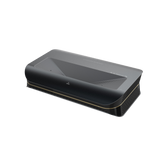
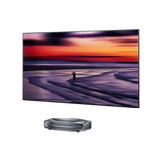
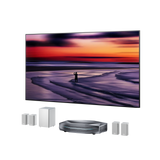
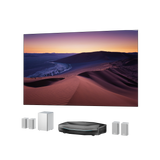
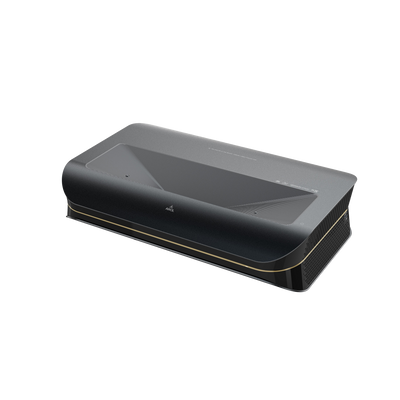
Bringing the Theater Home: Dolby Vision and IMAX Enhanced on the AWOL Vision Aetherion
After experiencing a film in IMAX or Dolby Cinema, the question inevitably follows: how close can you get at home?
No living room setup can replicate the architectural scale of a commercial IMAX screen — that's simply a matter of physics. But the gap between a premium home theater and a commercial cinema has narrowed dramatically, and for viewers who want to enjoy both formats' best qualities on demand, the latest ultra-short throw (UST) projector technology is the answer.
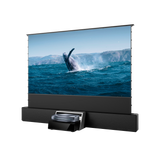
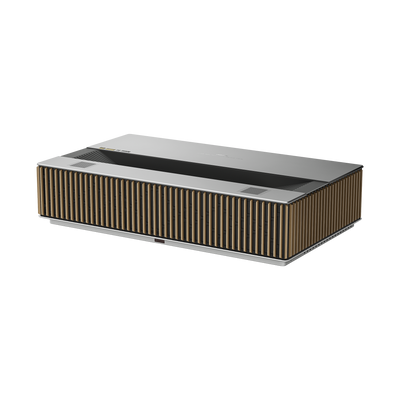
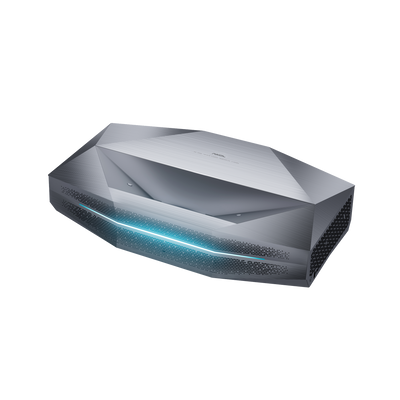
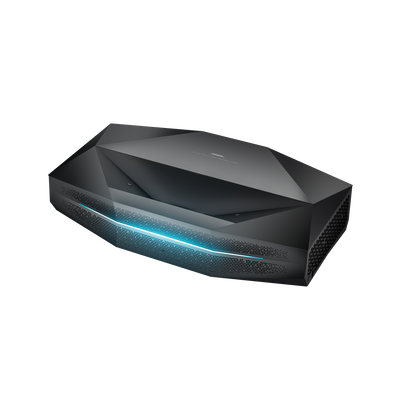
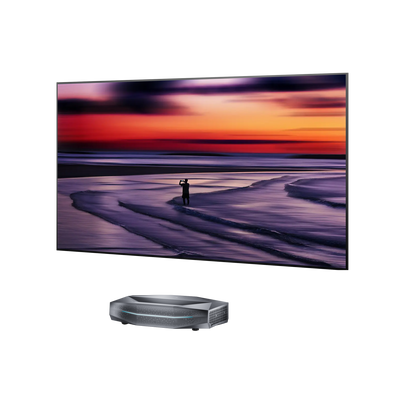
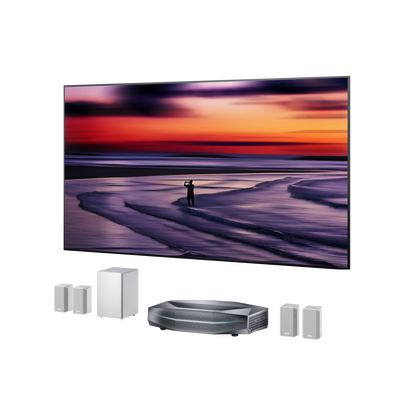
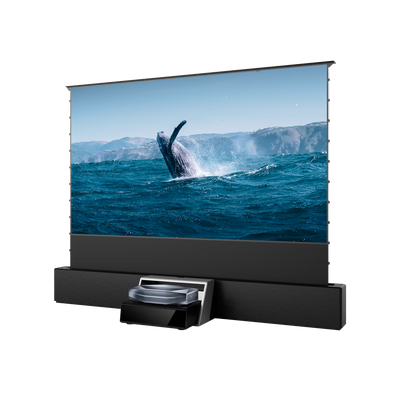
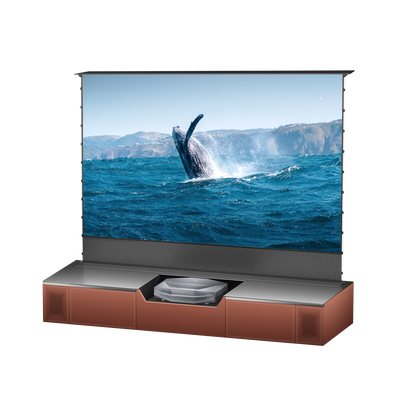
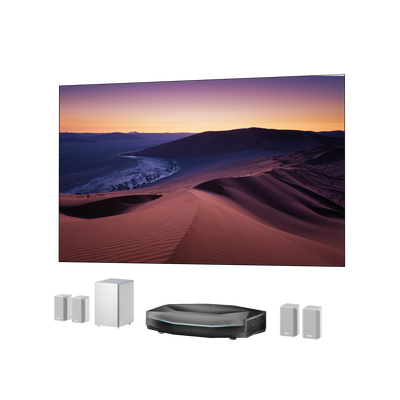
The AWOL Vision Aetherion Max was built specifically with this in mind. Powered by RGB Pure Triple Laser technology and a 6000:1 native contrast ratio, the Aetherion Max can project massive, cinema-level displays from 80 to 200 inches. Crucially, it natively supports Dolby Vision and IMAX Enhanced — meaning you don't have to choose between formats at home the way you do at the multiplex.
When you're watching an IMAX Enhanced title, you get the expanded picture information and optimized audio that the certification guarantees. Switch to a Dolby Vision stream, and the projector's laser engine delivers the inky black levels and vibrant color range that define the Dolby Cinema experience. Paired with a capable surround sound system, the Aetherion delivers the closest possible approximation of the commercial theater experience — and unlike your local multiplex, you can pause, rewind, and watch in your pajamas.
For serious cinephiles who've fallen in love with premium formats, the Aetherion is how you bring that standard home.
Frequently Asked Questions (FAQ)
What is the main difference between Dolby Cinema and IMAX?
IMAX focuses on massive screens and expanded aspect ratios (up to 1.43:1) to provide a larger-than-life sense of scale — particularly powerful for films shot natively in IMAX format. Dolby Cinema focuses on superior picture contrast and color accuracy (Dolby Vision HDR), highly precise 360-degree audio (Dolby Atmos), and premium recliner seating.
Is a Dolby Cinema screen as big as IMAX?
No. While Dolby Cinema screens are large premium formats, true IMAX screens — especially IMAX Laser installations — are significantly wider and taller, often extending from floor to ceiling.
Is Dolby Cinema or IMAX louder?
IMAX is generally considered "louder" with a raw, booming bass presence you can feel physically. Dolby Atmos is slightly more balanced and focuses on precise directional placement of sound rather than sheer volume.
What does "Filmed for IMAX" mean?
It means the film was shot using cameras that capture a taller 1.43:1 aspect ratio frame. In an IMAX theater, you see the complete image — up to 26% more picture than in a standard cinema. In other formats, the frame is cropped.
Does Dolby Cinema mean IMAX?
No. They are competing premium cinema formats owned by entirely different companies — Dolby Laboratories and the IMAX Corporation. They have no technical overlap.
Can I experience Dolby Vision and IMAX Enhanced at home?
Yes. Devices like the AWOL Vision Aetherion Pro and Max natively support both Dolby Vision and IMAX Enhanced, allowing you to experience both formats' benefits at home on screens up to 200 inches.
Be the First to Know
Subscribe for special deals, news, and important product information, and get your exclusive $100 discount.
Related Articles

Rec2020 Explained: Color Gamut, HDR and Picture Quality
Projector Says No Signal? How to Find and Fix the Problem
Why Is My Projector Blurry? 8 Causes and the Fixes That Work
Projector Lens Shift Explained: How Much Placement Freedom You Actually Get
Projector Lens Replacement: Can You Replace or Repair the Lens?