













Projector vs. TV: The Ultimate Display Technology Guide
For the last decade, the advice was simple: If you want a screen bigger than 75 inches, you buy a projector. If you want picture quality, you buy a TV.
In 2026, that rule is dead.
We are now living in the era of the 98-inch "Megasize" TV and the Ultra Short Throw (UST) Laser Projector. The lines have blurred. You can now buy a massive TV for under $3,000, and you can buy a laser projector that rivals a TV’s brightness.
So, how do you choose? This guide breaks down the battle between the titans of home entertainment: OLED, Mini-LED (QLED), and Laser Projection.
Projector vs. OLED vs. Mini-LED: The 2026 Comparison Chart
The Short Answer: There is no longer a single "best" technology, only the best tool for your specific room.
Mini-LED dominates sun-drenched living rooms where fighting glare is the priority. OLED remains the gold standard for dark rooms where perfect contrast is required. Laser Projectors are the undefeated champions of value and immersion for anyone seeking a screen size larger than 98 inches.
|
Feature |
OLED TV |
Mini-LED / QLED TV |
Laser Projector |
|
Best For... |
Dark Room Perfection |
Bright Living Rooms |
Massive Immersion (120"+) |
|
Max Common Size |
83" - 97" |
98" - 115" |
150" (Variable) |
|
Brightness |
High |
Extreme (King of Day) |
Good (w/ ALR Screen) |
|
Black Levels |
Perfect (Infinite) |
Excellent |
Good |
|
Installation |
Difficult (Heavy) |
Difficult (Very Heavy) |
Variable (Simple to Complex) |
|
Eye Comfort |
Low (Emissive) |
Low (Very Bright) |
|
|
3D Support |
None |
None |
Types of Displays: OLED, Mini-LED, and Laser Projectors Explained
Before comparing performance, it is critical to understand that "TV" and "Projector" are no longer single categories. Here is the breakdown of the display technologies you will actually see on the shelf.
The TV Heavyweights

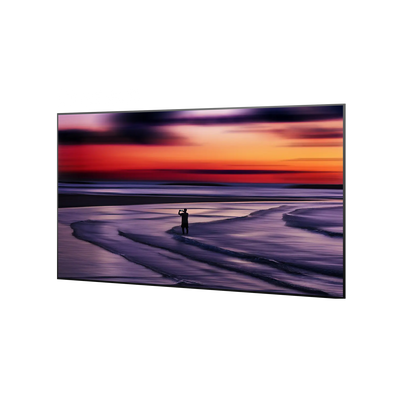
- OLED (Organic Light-Emitting Diode): The premium choice. Each pixel produces its own light and can turn off completely. This creates "perfect blacks" and infinite contrast.
- Mini-LED / QLED: The brightness choice. These use a traditional backlight (Mini-LEDs) enhanced with "Quantum Dots" (QLED) to boost color and brightness. They cannot hit perfect zero-black like OLED, but they get significantly brighter.
- Standard LED: The budget choice. Uses standard backlighting. Good for casual viewing, but lacks the contrast and pop of the premium options.
The Projector Powerhouses

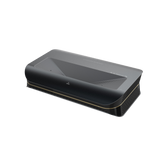
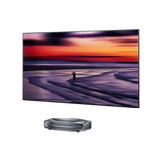
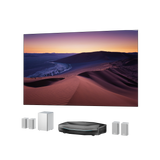
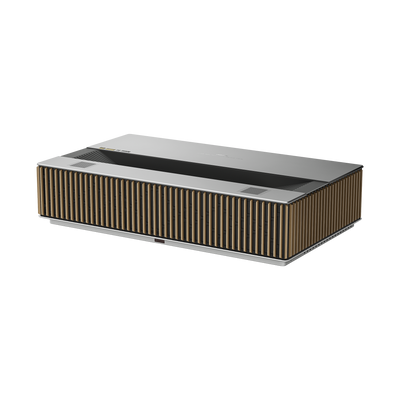
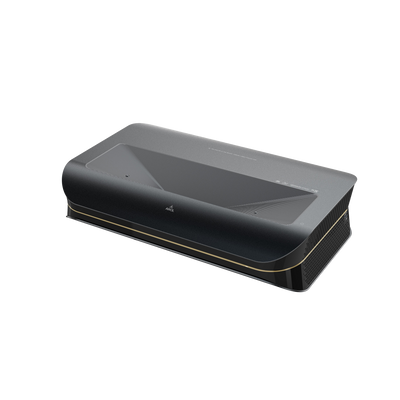
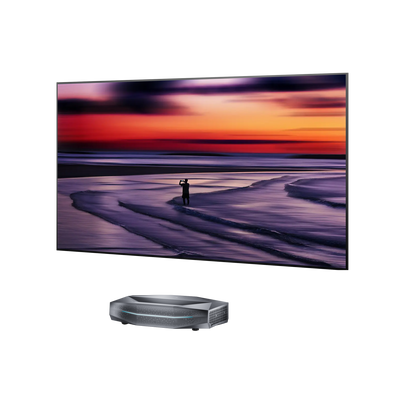
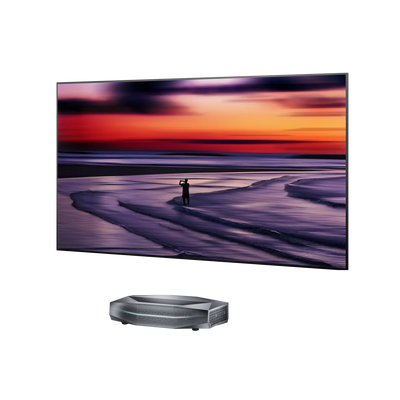
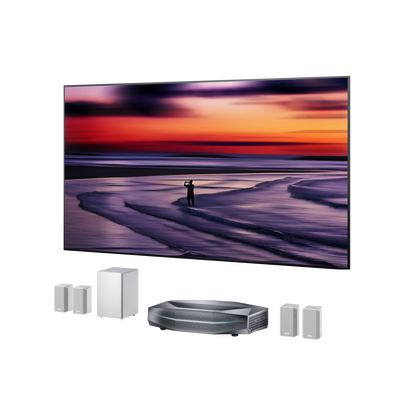
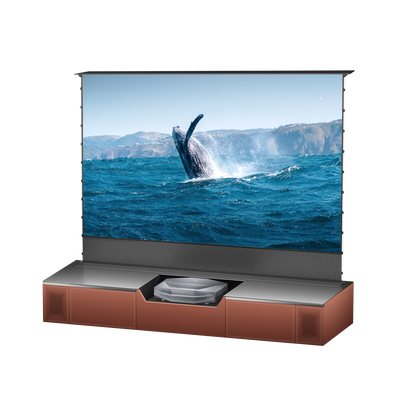
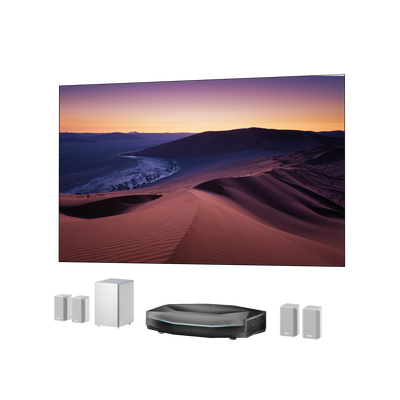
- UST (Ultra Short Throw) / Laser TV: The living room solution. These sit on your media cabinet, just inches from the wall, and shoot the image straight up. They are designed to replace a TV directly. (See: What is UST?)
- Long Throw Projector: The cinema solution. These sit at the back of the room or mount to the ceiling. They require a clear path to the screen but offer the most flexible screen sizes (up to 300 inches).
- Portable Projector: The lifestyle solution. Compact, battery-powered or plug-in units designed to be moved from room to room or taken outdoors.
Best for Bright Rooms: Mini-LED TV vs. Laser TV Comparison
This is the most common scenario: You have a living room with windows, and you want to watch sports on a Sunday afternoon.
The Mini-LED / QLED Advantage
If your room is sun-drenched and you cannot use blackout curtains, a Mini-LED TV is the superior choice. These TVs pump out 2,000 to 5,000 nits of brightness. They can brute-force their way through direct sunlight, keeping the image popping with vibrant color.
The Projector (UST) Counter-Attack
A Laser TV (Ultra Short Throw) can work here, but only if paired with an Ambient Light Rejecting (ALR) Screen. This special screen blocks light from windows while reflecting the laser light to your eyes.
Why choose the Projector? Aesthetics. A 100-inch TV is a giant, ugly black mirror when turned off. A Laser TV can disappear into a media cabinet, leaving your wall clean.
The Verdict: If you prioritize raw daytime brightness above all, buy a Mini-LED TV. If you prioritize room design and a "disappearing" tech footprint, buy a Laser TV.
Best for Home Theater: OLED TV vs. Long Throw Projector
This is the battle for the movie buffs. You have a dedicated space, or at least a room where you can dim the lights.
The OLED Technical Perfection
OLED remains the king of "Pixel Peeping." Because each pixel turns on and off individually, you get infinite contrast. In a pitch-black room, the image looks like a window into another world. However, you are strictly limited by size. A 97-inch OLED costs as much as a new car.
The Projector "Scale" Factor
Movies are not just about contrast; they are about Field of View (FOV). A 150-inch projector screen fills your peripheral vision in a way an 83-inch OLED cannot.
The Motion Difference: Projectors handle 24fps motion (the standard for films) more naturally. OLEDs have such instant response times that panning shots in movies can look "stuttery" unless you turn on motion smoothing (the dreaded "Soap Opera Effect").
The Verdict: Buy OLED if you want technical perfection and the deepest blacks. Buy a Premium Laser Projector if you want the immersive "feeling" of a commercial movie theater.
Screen Size & Installation: 98-inch TV vs. 150-inch Projector
In 2026, you can buy a 98-inch LED TV for $2,000–$4,000. This has killed the "cheap projector" market, but it introduced a new problem: Logistics.
The Nightmare of the 98-inch TV
- Weight: These units weigh 130+ lbs.
- Access: They often do not fit in elevators, narrow stairwells, or tight hallway turns.
- Fragility: One slip during installation, and the panel is dead.
The Projector Reality Check
Projector installation varies wildly.
- Portable/Lifestyle: Zero installation. Put it on a table and turn it on.
- UST (Laser TV): Moderate. Requires precise alignment on a media cabinet.
- Ceiling Mount (Long Throw): Complex. You need to run power and HDMI cables through the ceiling (see our ceiling mount guide), mount a heavy bracket into studs, and align the lens perfectly.
However, getting the device into the room is easy. A projector fits in a backpack, and a 150-inch screen comes rolled up in a tube.
The Verdict: If you are renting, moving frequently, or have a difficult room entry (like a basement with tight stairs), a Projector is often the only way to get a massive screen into the house.
Eye Health: Blue Light and Eye Strain in TVs vs. Projectors
Regardless of which TV tech you choose (OLED, LED, QLED), they all use Emissive Light. They shoot photons directly into your retinas. Over long gaming sessions or binge-watching, this focused intensity causes "Digital Eye Strain."
Projectors use Reflected Light. The image bounces off the screen before reaching your eyes, mimicking natural light (like sunlight bouncing off a wall). This is significantly softer on the brain and allows for longer, more comfortable viewing sessions without the headache. (Read more: Do Projectors Have Blue Light?)
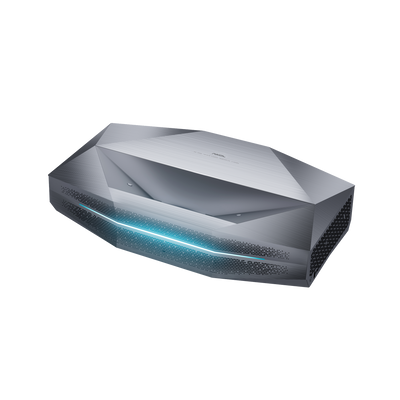
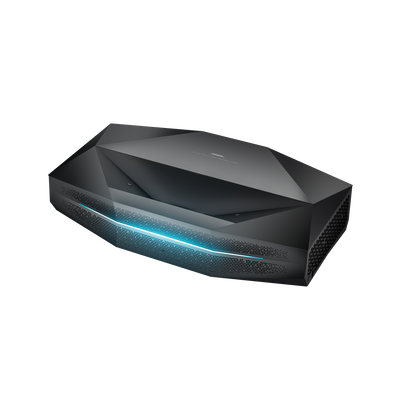
Spotlight: The AWOL Vision Aetherion
If you find yourself torn between the brightness of a TV and the cinematic immersion of a projector, the AWOL Vision Aetherion was engineered to bridge that specific gap.
- Color That Beats TVs: While OLEDs are famous for contrast, they struggle with color volume. The Aetherion’s Triple Laser engine covers 110% of the BT.2020 color gamut—delivering a spectrum of colors that traditional TV panels literally cannot produce. (See: Color Space for Cinematic Experience)
- Best of Both Worlds: It uses advanced laser dimming to achieve deep blacks similar to high-end LED TVs, while maintaining the soft, reflective light that is easy on the eyes.
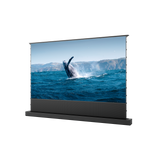
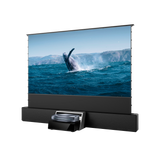
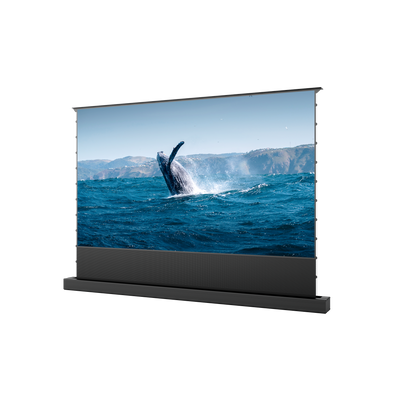
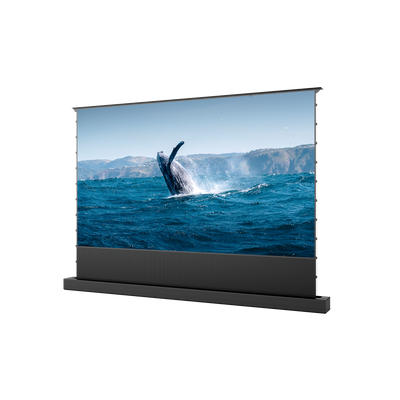
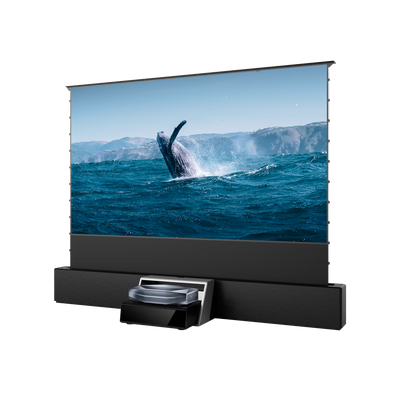
- Installation Ease: Unlike a 100-pound TV, the Aetherion is portable and pairs with rollable floor-rising screens, making it the ideal solution for renters or anyone who wants a 150-inch screen without remodeling their home.
Conclusion: Should You Buy a TV or a Projector?

Ultimately, the choice between a Projector and a TV comes down to your environment and your priorities.
- Stick with a TV (Mini-LED or OLED) if: You want a straightforward "plug and play" experience, you watch TV primarily during the day with the curtains open, or you are a competitive gamer who needs the absolute fastest pixel response times.
- Make the jump to a Projector if: You crave the immersive "Big Screen" cinema experience (100+ inches), you want a screen that is easier on your eyes, or you need a massive display that is easy to move and install in difficult spaces.
In 2026, you don't have to compromise on quality to go big. You just have to decide how big you want to go.
FAQ on Projector vs. TV
Do laser projectors burn out like old bulb projectors?
No. Modern laser projectors vs. lamp projectors are rated for 20,000 to 30,000 hours. That is roughly 4 hours of viewing every single day for 17 years. They are as durable as a modern TV and do not require expensive bulb replacements.
Do I need a separate sound system for a projector?
Usually, yes. While some Laser TVs (like the Aetherion) come with robust built-in soundbars, most ceiling-mounted projectors have weak speakers because they are located far above your head. For a true theater experience, a surround sound system is recommended.
Is a 4K Projector actually "True 4K"?
Most consumer laser projectors use a technology called "Pixel Shifting" to achieve 4K resolution on screen. While technically different from a native 4K TV panel, at a viewing distance of 10 feet, the human eye cannot distinguish the difference in resolution. (Read more: What is True 4K?)
Can I play PS5 or Xbox Series X on a projector?
Yes, absolutely. In the past, projectors were slow, but 2026 models have changed the game. While standard units offer ~15ms lag, high-performance models like the Aetherion utilize ALLM (Auto Low Latency Mode) to achieve 1ms latency. This matches the responsiveness of dedicated gaming monitors, making them perfect for competitive shooters and RPGs alike. (See our guide: How to Choose a Gaming Projector)
What is the difference between UST and Long Throw?
UST (Ultra Short Throw) sits on your media cabinet inches from the wall, like a TV replacement. Long Throw sits at the back of the room (or on the ceiling), like a traditional cinema projector. UST is better for living rooms; Long Throw is better for dedicated dark theater rooms.
Be the First to Know
Subscribe for special deals, news, and important product information, and get your exclusive $100 discount.
Related Articles
Upgrade Your UST Setup: Is AWOL LuxVision Right for Your Room?
Black Projector Screen: Is It Right for Your Room?
WiFi Projector Buying Guide: Features That Actually Matter
How to Create a Modern Living Room with an Ultra Short Throw Projector Cabinet?
Rear Projection Screen Guide: Best Materials Options