

















Battery Operated Projectors: The Truth About Outdoor Cinema
There is something undeniably magical about an outdoor movie night. Whether it’s camping in the wilderness, lounging in an RV, or just gathering the family in the backyard, the idea of cinema under the stars is a universal dream.
Naturally, the first piece of gear most people look for is a battery-operated projector. The appeal is obvious: no wires, no extension cords, just grab-and-go entertainment.
However, many first-time buyers run into a frustrating reality. The image is often too dim to see until pitch black, the battery dies before the movie ends, and the picture quality is a far cry from the 4K TV in their living room.
If you are in the market for a portable setup, it is crucial to understand the trade-offs. Sometimes, the best "battery" solution isn't inside the projector at all.
The "Lumen Trap": Why Compact Batteries Mean Dim Images

The biggest challenge with all-in-one portable projectors is physics. Creating a bright, colorful image requires a significant amount of energy.
- Mini Battery Projectors: To conserve battery life, these units usually run at very low wattages (30W–60W). This limits their brightness significantly—often capping out around 200 to 600 ISO Lumens.
- The Result: You can only use them in total darkness. If there is a campfire nearby, moonlight, or even distant streetlights, the image will look washed out and unwatchable.
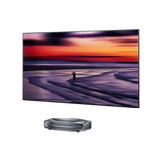
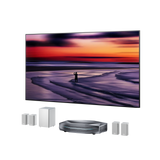
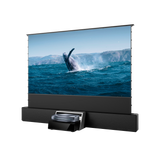
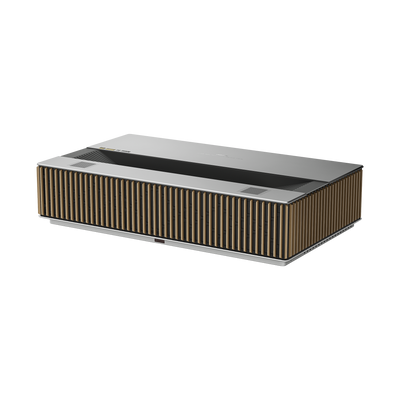
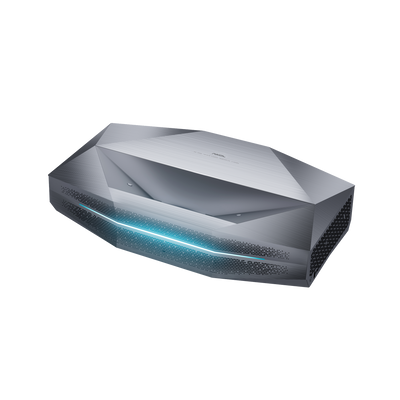
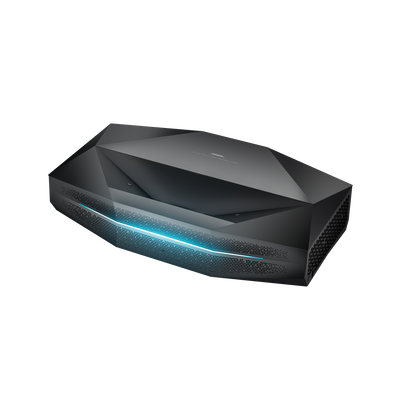
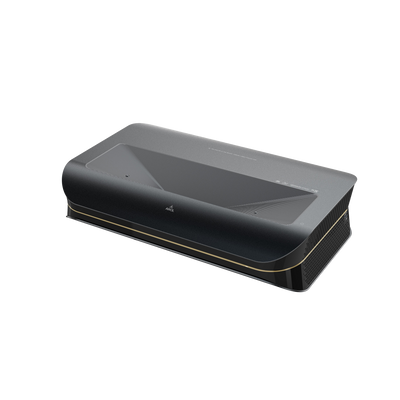
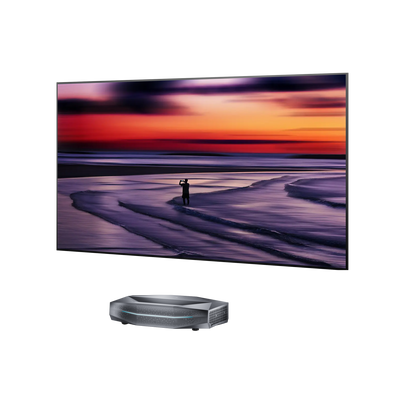
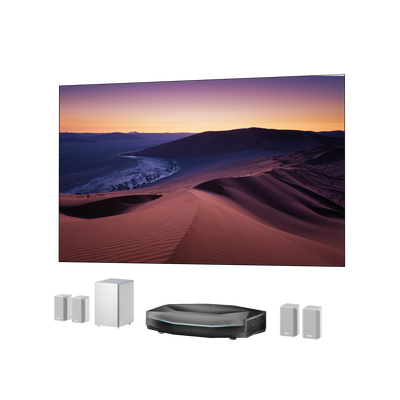
In contrast, a high-performance laser TV like the AWOL Vision LTV-3500 Pro delivers 3000 ISO Lumens (the gold standard for brightness measurement). This allows you to start your movie at dusk rather than waiting for midnight, but it requires more power than a small internal battery can provide.
Understanding brightness standards is key to outdoor satisfaction. For a deeper explanation of how this works, read our guide on ANSI Lumen vs Lumen.
The Battery Anxiety Factor
The second hurdle is runtime. Most internal batteries are rated for 2 to 2.5 hours under ideal conditions.
- The "Eco Mode" Trick: Many manufacturers claim 3-4 hours, but only in "Eco Mode," which dims the picture even further to save power.
- The Movie Runtime: If you are watching a modern blockbuster like Dune or Avengers, a 2-hour battery will cut to black right before the climax.
Furthermore, internal batteries degrade over time. After two years of camping trips, that 2-hour battery might only last 45 minutes, effectively turning your portable projector into a wired one anyway.
The Pro Solution: Laser TV + Portable Power Station
Does this mean you can't enjoy premium cinema outdoors? Absolutely not. You just need to separate the battery from the projector.
The "Glamping" and luxury backyard trend has shifted toward pairing a high-performance Laser Projector with a generic Portable Power Station (often called a solar generator).
Why This Setup Wins:
- Cinema Quality Anywhere: You get full True 4K resolution, HDR, and massive 3000 ISO Lumens brightness, creating a legitimate theater experience on your lawn or campsite.
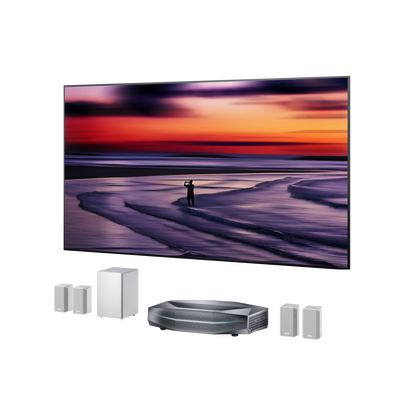
- Sound That Carries: Tiny projectors have tiny speakers. A substantial unit like the AWOL LTV-3500 Pro has a built-in sound system capable of playing Dolby Atmos, meaning you don’t need to lug around extra Bluetooth speakers.
- Unlimited Flexibility: If you run out of power, you can swap the power station or recharge it via solar panels, rather than waiting for the projector itself to charge.
The Math: What Size Power Station Do You Need?
If you decide to go the "Pro" route, you need to buy a power station that matches your projector's energy appetite. Here is the simple formula:
Projector Wattage × Hours of Use = Watt-Hours (Wh) Needed
Example Scenario: You want to watch two movies (4 hours total) using a high-end Laser TV (approx. 320 Watts).
320W × 4h = 1280Wh
Recommendation: You would need a portable power station with a capacity of at least 1300Wh to 1500Wh. These units are roughly the size of a small cooler—perfectly portable for car camping or backyard setups.
Scenario Guide: Which Setup is Right for You?
We aren't saying small battery projectors are useless. They have their place. Here is how to decide:
Scenario A: The Backpacker
Goal: Hiking 5 miles into the woods; weight is everything.
The Verdict: Buy a Mini Projector.
The image will be dim (sub-500 ISO Lumens), and the sound will be quiet, but carrying a 30lb laser TV isn't an option here.
Scenario B: The Backyard & RV Host
Goal: Hosting a neighborhood BBQ, a kids' sleepover, or an RV tailgate party.
The Verdict: Use a Laser TV + Power Station.
You have a vehicle or a house nearby. Weight isn't the primary concern—experience is. You want your guests to be blown away by the picture, not squinting at a dim sheet.
For more tips on setting up this environment, check out our guide on creating an outdoor home theater in your backyard.
Checklist: The Ultimate Portable Cinema
Once you have your power source sorted, don't forget the other essentials for a glitch-free night.
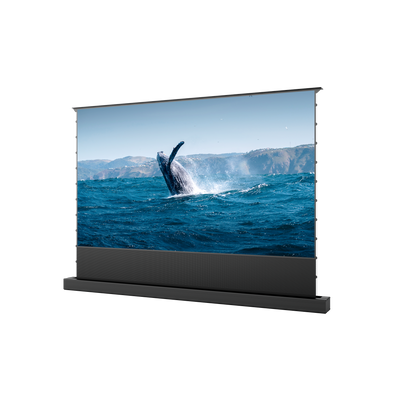
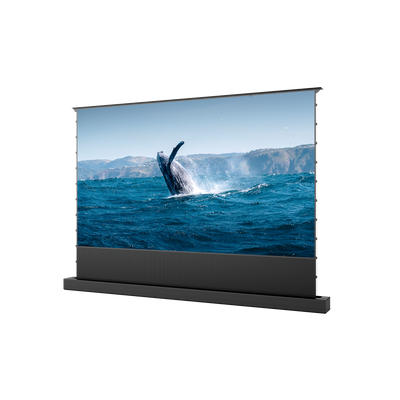
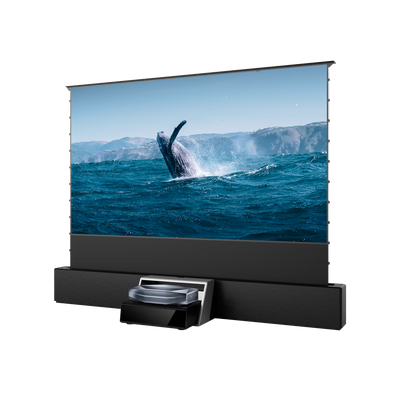
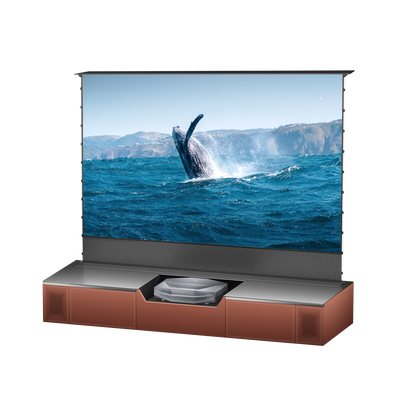
- The Screen: Do not project onto a wrinkled bedsheet. It ruins the contrast. For a portable setup, a floor-rising projector screen is ideal because it collapses into a tube for transport but stands rigid when in use.
- The Source: How will you stream the movie?
- Offline: Download movies to a USB drive or laptop.
- Online: Use a streaming stick powered by the projector's USB port, connected to your phone's hotspot. Learn how to set up an Amazon Fire Stick on a projector.
- The Audio: If you are using a smaller projector, you'll likely need external sound. Check our guide on connecting a projector to a surround sound system.
Conclusion
A battery-operated projector is a convenient tool for quick, casual viewing, but it often requires compromising on brightness and picture quality.
If your goal is to replicate the magic of the cinema in the great outdoors—without the "dim and grim" experience—consider upgrading your power source rather than downgrading your projector. By pairing a cinema-grade Laser TV with a modern power station, you get the best of both worlds: portability and performance.
Be the First to Know
Subscribe for special deals, news, and important product information, and get your exclusive $100 discount.
Related Articles
7 Basement Home Theater Ideas with a Style of Their Own
Projector Screen Paint: Is It Worth Painting Your Wall?
A Projector in an Apartment: Make Room for the Screen, Not a Theater
Small Man Cave Ideas: 10 Activity-Based Setups for Limited Space
Frame TV Alternative: A Smarter Vision for the Living Room