





























Basement Theater: How to Turn Your Basement Into a Home Cinema
A basement theater can be one of the best uses of below-grade space: light is usually easier to control, the concrete structure can limit some vibration, and the room sits away from everyday household traffic. Those advantages only matter, however, if the basement is dry, comfortable, quiet, and laid out around real viewing positions.
This guide will walk us through how to transform a basement into a home theater, covering layout, seating, sound, lighting, equipment choices, and the budget needed to bring the room together.
Prepare Your Basement Before Building the Theater
A basement has huge potential, but it also has unique challenges. Before investing in equipment, make sure the room itself is ready.
Check Moisture, Temperature, and Comfort
The first priority is creating a comfortable environment. Look for signs of moisture, including musty smells, water stains, condensation, or damp flooring. A basement theater should feel like a finished living space, not a converted storage area.
Ventilation is also important. A closed room with a projector, gaming consoles, receivers, and multiple people can quickly become warm. Proper airflow helps maintain comfort and protects your equipment over time.
Plan Electrical and Connectivity Early
A modern basement theater usually requires more connections than expected. Map outlets for the display, subwoofers, powered seating, networking gear, consoles, and equipment rack. Keep line-voltage work code-compliant and appropriately separated from signal wiring.
Label both ends of every cable, leave enough service slack, and install conduit wherever replacing an HDMI or network cable would otherwise require opening the drywall. Photograph each open wall and record measurements before it is covered. These records will make mounting equipment and troubleshooting problems much easier later. A home theater wiring guide can help you plan the cable routes before the electrician and drywall crew arrive.
Choose the Right Basement Theater Layout

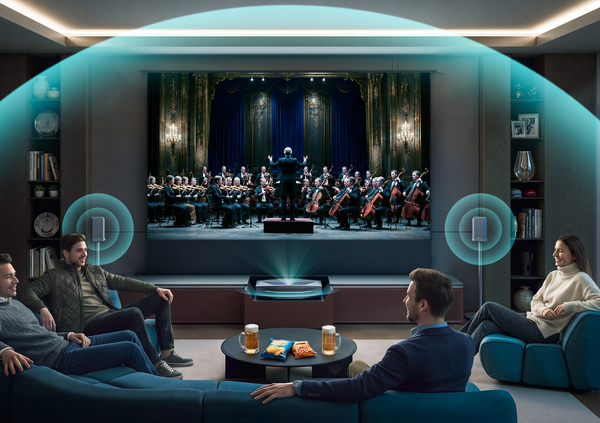
A dedicated theater offers the greatest control. The screen and speakers can be positioned around the main seats, darker finishes can be used without affecting the rest of the home, and the door can be closed while the system is playing. This layout works especially well when movies are the room’s primary purpose or when controlling sound transmission to the floor above is important.
In an open basement, define a clear theater zone rather than treating the entire floor as one viewing area. Position bars, game tables, play areas, or walkways behind the audience whenever possible so activity does not cross the screen or distract viewers. A sectional may work better than fixed recliners, while separately controlled lighting allows the rest of the basement to remain usable without washing out the image.
Plan the Screen Wall, Viewing Distance, and Seating Together
Screen size should not be decided from the empty wall alone. Start with the room’s usable depth, mark the proposed image with painter’s tape, and place a temporary chair where the main row would sit. Watch familiar content—including scenes with subtitles—to check whether the whole image feels immersive without requiring constant eye or head movement.

Treat the Screen Wall and Seats as One Layout
Choose a screen wall with few interruptions and a simple traffic pattern. Avoid positions where a door opens across the picture, a support post affects the viewing angle, or people must pass between the audience and the screen. In an open basement, arrange the adjoining bar, game table, or walkway behind the seats whenever possible.
Before fixing the screen position, confirm that the front speakers, center channel, subwoofer, and equipment have enough room. Then test the view from every regular seat, not just the center. A screen that feels comfortable from the main chair may be too large or partially blocked from the ends of a sectional.
Adapt the Seating to a Low Ceiling
One generous row often works better than two cramped rows in a basement. A sofa, sectional, or wall-hugging recliners can provide comfortable capacity without placing viewers beneath a soffit or narrowing the route to stairs and utilities.
If a second row is essential, mock up the front-row head height and rear-row eye position before building a riser. The platform must improve the sightline while preserving headroom and allowing safe steps with low-level lighting. A side aisle generally retains better central seats than an aisle through the middle.
Choose the Display, Screen, and Speakers for the Room
TV, Long-Throw Projector, or Ultra-Short-Throw Projector?
A TV is straightforward in a small, bright multipurpose room, although very large panels can be difficult to move down basement stairs.
A long-throw projector delivers a cinema-scale image in a dark dedicated room, but it requires a clear throw path, ceiling placement, nearby power, and a longer cable run.
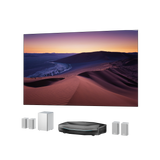
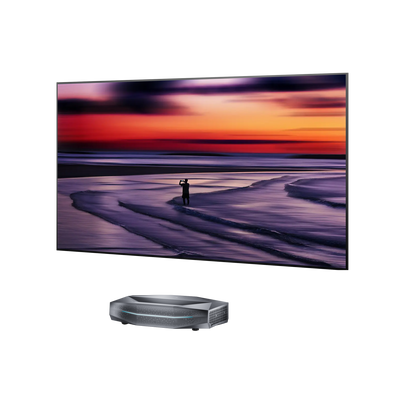
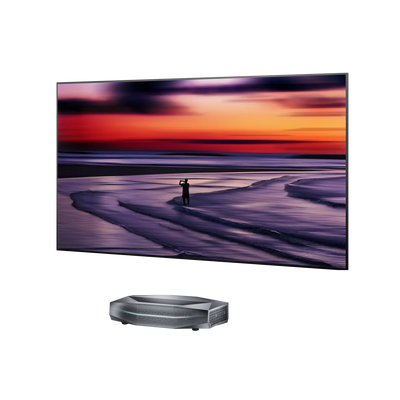
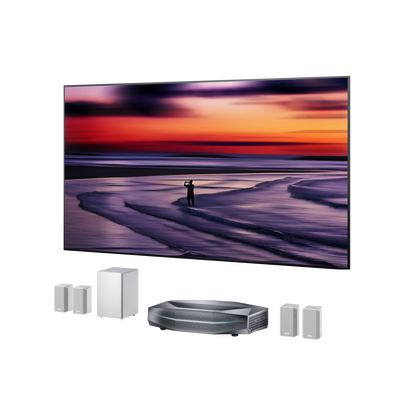
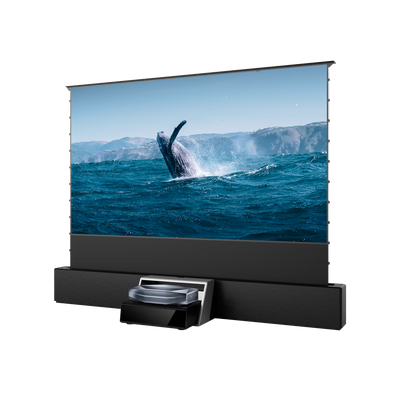
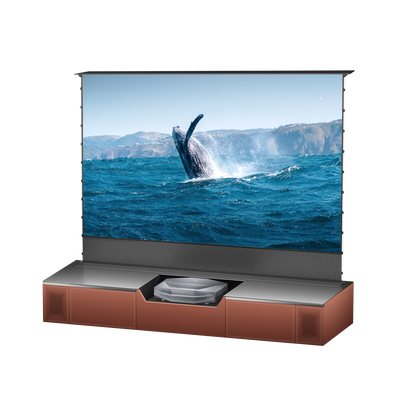
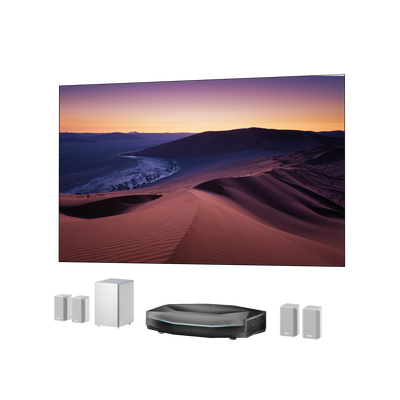
An ultra-short-throw projector keeps the equipment at the front of the room, making it particularly useful when a low ceiling or central soffit complicates ceiling mounting. That arrangement also suits a flexible basement where movie nights share space with sports, parties, and gaming. The Aetherion Max, for example, can sit close to the screen and produce a large image without taking over the room. Its 3,300 ISO-lumen output offers more flexibility when lights remain on around a bar or game table, while VRR and low-latency support help console and PC games feel responsive on the same wall-filling display.

Match the Screen and Audio to Everyday Use
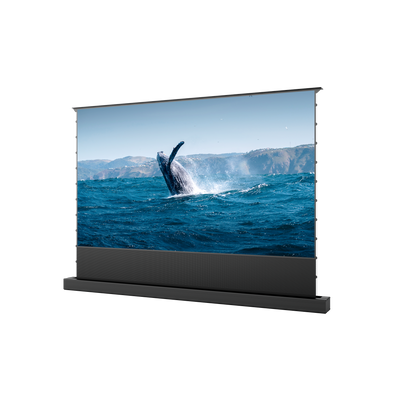
Choosing the right screen depends on how the basement will actually be used. In a fully dark dedicated theater, a matte white screen offers a bright, natural-looking image and remains consistent across a wide seating area. If lights near a staircase, bar, or game table are often left on, a compatible ALR or CLR screen can help prevent the picture from appearing washed out. Projector type matters as well: an ultra-short-throw model needs a screen designed to receive light from below, while a long-throw setup may allow speakers to sit behind an acoustically transparent surface.
For audio, prioritize clear dialogue and even coverage across the regular seats. A soundbar and subwoofer may be enough for a casual multipurpose room. A dedicated theater gives separate front, center, surround, and overhead speakers more room to work. Test more than one subwoofer position and calibrate from the main seating area; bass response can change dramatically across a small enclosed basement.
Design Basement Theater Lighting in Zones

Basement theater lighting should make the room safe and welcoming without drawing attention away from the screen. Use separate dimmable zones for wall sconces, general room lighting, and low-level step or aisle lights so each can be adjusted independently. Position fixtures where their light will not fall directly across the screen or reflect into viewers’ eyes.
In an open basement, keep the bar, game area, and stair lighting on separate controls. This allows someone to move through the adjoining space without washing out the picture. For more guidance on fixture placement, dimming, and layered illumination, explore these home theater lighting ideas.
How Much Does a Basement Theater Cost
Basement theater costs vary because the room and the A/V system are separate budgets. A basic setup in an already finished basement can start around $2,000, while a professionally designed and installed theater may reach $10,000 to $60,000 or more.
Instead of spending everything on the projector, screen, or speakers, prioritize the elements that are difficult to change later: moisture control, room layout, electrical planning, ventilation, and cable routes. A well-planned mid-range theater often delivers a better experience than an expensive system installed in a poorly designed room.
Basement Theater Setup: Build a Space You Will Actually Use
A successful basement theater is not defined by red seats or the largest screen that fits. It is a dry, comfortable room where the picture, sound, lighting, seats, and controls work together. Plan the fixed parts first, test the layout at full scale, and leave practical access for future upgrades.
If you’re still picturing what your basement theater could become, visit our Community Showroom to see how other movie lovers have brought their own spaces to life—and perhaps find an idea that feels just right for yours.
Frequently Asked Questions
Is a Basement Good for a Home Theater?
Yes. Basements often offer strong light control, physical separation from busy living areas, and a solid floor. They are a good choice only after moisture, ventilation, access, ceiling height, and nearby mechanical noise have been addressed.
What Is a Good Size for a Basement Theater?
There is no universal minimum. A compact room can support one row and a large display, while a second row requires more depth, headroom, and circulation space. Test the proposed screen and seats at full scale rather than choosing by room dimensions alone.
Does a Basement Theater Need to Be Soundproofed?
Not always. A multipurpose media area may need only sensible volume control, door seals, and acoustic treatment. A dedicated theater below bedrooms usually benefits from stronger ceiling and wall isolation planned before drywall. Complete soundproofing is difficult, especially at bass frequencies.
Is a Projector Better Than a TV in a Basement?
A projector is usually the better route to a cinema-scale image in a dark basement. A TV may be more practical in a bright multipurpose space or a very short room. Compare usable image size, ambient light, throw path, installation access, and audio placement before choosing.
Be the First to Know
Subscribe for special deals, news, and important product information, and get your exclusive $100 discount.
Related Articles
7 Basement Home Theater Ideas with a Style of Their Own
Projector Screen Paint: Is It Worth Painting Your Wall?
A Projector in an Apartment: Make Room for the Screen, Not a Theater
Small Man Cave Ideas: 10 Activity-Based Setups for Limited Space
Frame TV Alternative: A Smarter Vision for the Living Room