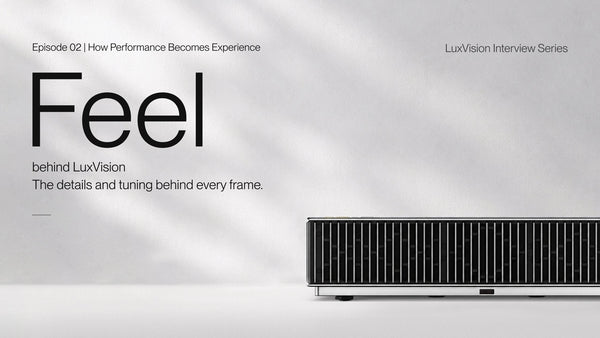

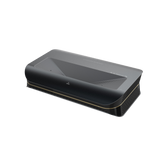







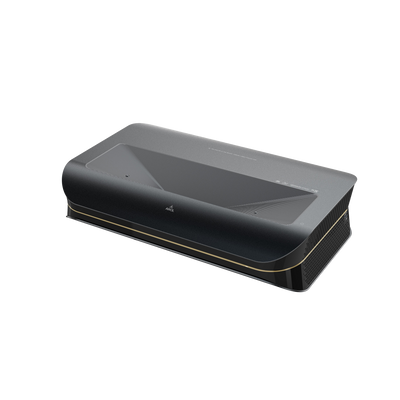


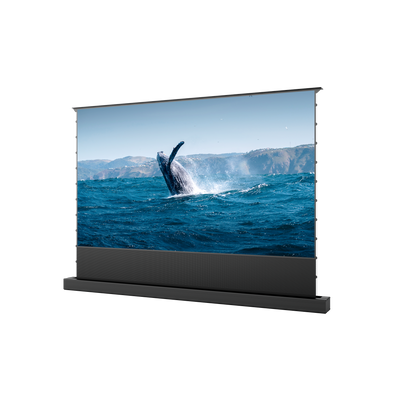




Feel · Behind LuxVision | Why AWOL Built a Different Kind of UST Projector
Meet Bilie
Bilie
Product Manager · LuxVision Product & R&D Lead
6 Years in Display & Home Entertainment
At AWOL Vision since 2020, Bilie has spent six years working across product planning, display technology and optical development.
For him, building a projector has never been only about making the numbers better.
It starts with understanding how people actually live with the product.
And that is where his story with LuxVision begins.

“How Can We Make a Great Big-Screen Experience Feel Simpler?”
After years in the projection industry, Bilie kept coming back to one question:
How can we make it easier for people to enjoy a high-quality large screen in different environments?
He had seen the same challenges appear again and again through user feedback.
A projector could deliver an impressive image in a dark room, but ambient light could change the viewing experience during the day.
Installation could also become a challenge. Positioning, alignment and image correction often require users to spend time learning how to get everything just right.
For Bilie, these weren't simply technical problems.
They revealed a larger trade-off in projection:
Performance and convenience have often been difficult to achieve at the same time.
A product with excellent image quality may demand more from the installation environment. A product designed for easier setup may make compromises elsewhere.
So when the team began thinking about LuxVision, the starting point wasn't a single specification.
It was a different question: What if the projector could adapt more easily to the user's space, instead of asking the user to adapt to the projector?
LuxVision Completes the Lineup
AWOL already had Aetherion and Valerion, each created with a distinct role in the home entertainment experience.
For Bilie, LuxVision was never about replacing either one.
LuxVision completes the lineup.
It completes another key need within AWOL's product portfolio:
Flagship-level performance, combined with a more flexible and effortless everyday experience.
That means users can care deeply about image quality without wanting installation to become a project of its own.
It means a projector can be part of a living room, rather than requiring the living room to be built around it.
And it means flexibility can be considered part of performance—not something users have to trade away to get it.
This thinking shaped the development of LuxVision, from its optical system to the way it handles everyday installation and use.
The Idea Behind Optical Shift
One of the ideas that mattered most to Bilie was installation freedom.
Ultra-short-throw projectors are designed to work close to the screen, but that doesn't mean every home has the same furniture, room layout or installation conditions.
So the team explored a deceptively simple idea:
What if the image could move without moving the whole projector?
That question led to one of LuxVision's most challenging areas of development: Optical Shift.

Unlike digital image correction, optical shift physically adjusts the optical path to reposition the image.
For the user, the benefit is simple—more flexibility when positioning the projector, without relying on digital correction to reshape the image.
But making that possible inside a 0.18:1 ultra-short-throw optical system was anything but simple.
The optical architecture of a UST projector is already highly complex. Adding physical lens movement requires precision across the optical design, mechanical structure, manufacturing and assembly process.
The team had to make sure the lens could move accurately while maintaining image geometry, clarity and consistency.
For Bilie, that complexity was worth taking on for one reason: “A good product shouldn't require users to become projection experts first.”
Making the Complex Feel Simple
Bilie describes his role on LuxVision as coordinating the project from product concept through R&D and final implementation.
But when he talks about the project, he doesn't begin with technology.
He thinks about the moments technology is supposed to make easier.
A projector gets moved.
The room changes.
The curtains open.
The family wants to watch something during the day.
Someone wants to play a game.
These are ordinary moments, but they shape the real experience of a product.
That is why Bilie's personal working philosophy has remained simple: “Leave the complexity to the team, and give the simplicity to the user.”
For LuxVision, this idea became more than a working principle.
It became a design direction.
The engineering can be complex.
The technology can be sophisticated.
But the experience should feel natural.

What Does LuxVision Mean to Bilie?
After years of development, there is one thing Bilie hopes users remember about LuxVision.
Not simply its brightness.
Not simply its resolution.
Not simply its specifications.
But the freedom to enjoy a high-quality big-screen experience in more of the ways people actually live.

“LuxVision breaks through some of the traditional limitations of ultra-short-throw projection in brightness and installation flexibility, so users can enjoy a high-quality large-screen experience more easily in different environments.”
For Bilie, that is what the product is ultimately about.
More capability behind the scenes.
Less complexity in front of the user.
And there is much more to that story.
But How Do You Prove It?
An idea is only the beginning.
The next question is whether the technology can consistently deliver on that promise.
In the next chapter of Feel · Behind LuxVision, we meet the person behind the testing and validation process—and explore what happens when LuxVision enters the lab.
Be the First to Know
Subscribe for special deals, news, and important product information, and get your exclusive $100 discount.
Related Articles
Feel · Behind LuxVision | The Vision Behind AWOL LuxVision
Feel · Behind LuxVision | The Design Behind AWOL LuxVision