















Home Theater Lights: 7 Ideas to Set the Perfect Cinematic Mood
Picture this: you've finally finished building your dream media room. You’ve invested a significant amount of capital into a premium 4K ultra-short-throw projector and a reference-grade Dolby Atmos sound system. But the moment you flip the switch to turn the lights on, the room feels completely wrong. The space is too bright, the projection surface looks washed out, and the overarching vibe feels flat and clinical rather than immersive.
If this sounds familiar, you aren't alone. Lighting is easily the most overlooked element in a home theater build, yet it possesses a direct, measurable impact on both objective picture quality and how immersive your movie nights actually feel.
Why Lighting Makes or Breaks Your Home Theater Experience
There is a pervasive misconception that a high-performance home movie theater must operate in absolute, pitch-black darkness.While absolute darkness might mathematically maximize the contrast ratio of your projection screen, it simultaneously induces severe eye strain during prolonged exposure to bright, dynamic content.
A pitch-dark room does not inherently equal a good theater. For a truly immersive home cinema experience, combining ambient LED lighting for home theater spaces with accent sconces and bias lights can dramatically improve both comfort and cinematic atmosphere.
To achieve visual equilibrium, professional lighting designers abandon the traditional single overhead light fixture—which creates harsh shadows—and instead utilize a sophisticated three-layer approach:
- Ambient Lighting: This is the foundation of the room's illumination, providing the overall wash of light necessary for safe navigation, setting up the room, and cleaning. In a theater context, ambient light must be strictly controlled to ensure stray photons don't strike the screen and wash out the image.
- Task Lighting: Highly directional and engineered for specific activities, task lighting allows you to locate the remote control, read a Blu-ray case, or navigate the snack area without broadcasting light across the entire room.
- Accent Lighting: This layer generates the atmosphere. Accent lighting highlights architectural textures, acoustic treatments, or structural features, establishing a sense of depth so the walls don't disappear into a void.
7 Home Theater Lighting Ideas Worth Considering
The integration of modern home theater LED lighting requires specific, engineered solutions that address both your physiological comfort and the technical requirements of your display hardware. Here are seven brilliant home theater lighting ideas to elevate your space.
Idea 1. Bias Lighting (Behind the Screen)
Of the various lighting methodologies implemented in a cinema room, bias lighting—the practice of placing a controlled LED light strip directly behind the television or projection screen—is arguably the most critical for visual health.
When you stare at a highly luminous screen in an otherwise dark room, you create a massive disparity within your visual field. This intense contrast forces your eyes into a state of "pupillary tug-of-war." Your pupil tries to constrict to protect your retina from the bright screen, while simultaneously trying to dilate to see the dark surrounding walls. This constant muscular tension leads directly to visual fatigue and tension headaches.
By illuminating the wall behind the screen, bias lighting elevates the ambient brightness of your peripheral vision. This provides a stable anchor for your eyes, significantly reducing muscular strain. Furthermore, bias lighting creates an optical illusion that makes the absolute black levels on your screen appear subjectively darker, improving perceived contrast without requiring an actual increase in the display's peak brightness.
Pro Tip: Ensure your LED strip maintains a gap of approximately 2–6 inches from the wall edge to diffuse the light softly. If you are using a projector, maximizing this immersive lighting setup often requires pairing it with an Ambient Light Rejecting screen (see our screen buying guide).

Idea 2. Recessed Ceiling Lights with Smart Dimmers
When selecting ambient fixtures for your ceiling, skip the standard flush-mount luminaires. Flush-mount lights distribute light evenly across a nearly 180-degree beam angle, which inevitably strikes the projection screen and creates direct glare for seated viewers.
Instead, opt for recessed ceiling lights. Installed into hollow cavities within the ceiling, recessed lighting provides highly directional, focused illumination perfect for projector room lighting. For high-end builds, look for fixtures equipped with baffle trims—ridged, light-absorbing interior surfaces that trap stray light and dramatically reduce glare.
Idea 3. LED Strip Lighting Along Steps, Risers & Floors
Navigating a tiered home theater in the dark presents a significant safety hazard, but turning on the overhead lights ruins the immersion. The solution is low-lumen LED strip lighting installed along stair risers, baseboards, and beneath seating. This provides a vital pathway safety function without disrupting the movie.
The color of this floor lighting is critical. Bright white or blue lighting can reduce your eyes’ ability to adjust comfortably to dark viewing environments. To preserve your night vision, optical engineers highly recommend warm amber LEDs or deep red LEDs for floor lighting. Amber lighting optimally stimulates the eye's receptors, meaning you need significantly fewer total lumens to achieve clear visual resolution and navigate safely.
Idea 4. Wall Sconces for Cinema-Style Ambiance
Wall sconces are traditional cinema fixtures that introduce intentional architectural contrast to flat walls, generating that classic, nostalgic theater aesthetic. The optimal placement for these fixtures is along the side walls, evenly flanking the screen and seating area to break up the visual monotony of acoustic panels.
When shopping for sconces to enhance your cinematic lighting, pay attention to the orientation. Uplighting sconces cast light toward the ceiling, creating an optical illusion that makes rooms with low basement ceilings feel significantly taller. Bidirectional up/down sconces provide a balanced wash that accents wall textures while providing functional illumination for walkways.
Idea 5. Cove Lighting (Crown Molding LEDs)
Cove lighting operates on the principles of indirect illumination. By concealing LED strip lights within architectural recesses or behind crown molding, cove systems project a soft, subtle wash of light that rakes across the ceiling without exposing the viewer to the harsh point-source of the diode.
This application is exceptionally well-suited for rooms with tiered seating or raised tray ceilings. To prevent the ceiling from acting as a giant reflector that washes out your screen, ensure the molding is set a few inches below the ceiling plane, and consider using matte, dark-colored paint on the ceiling itself.

Idea 6. Smart Color-Changing LED Systems
The modern home movie theater lighting experience is rapidly transitioning from static bulbs to dynamic, responsive environments. Smart theater lighting systems analyze the colors of your video content in real-time and extend those hues to the physical walls of the room.
These systems typically use an HDMI synchronization box that intercepts the video signal, processes the edge-pixel color data, and transmits it to your ambient LED strips. Beyond active content synchronization, these smart setups allow for powerful scene automation.
Idea 7. Built-In Atmosphere Lamps — The Projector-Native Option
Historically, exploring advanced home cinema lighting ideas required routing complex HDMI sync chains, buying separate network hubs, and juggling multiple smartphone apps. However, a noteworthy evolution in the "all-in-one" theater setup trend is the emergence of built-in atmosphere lamps.
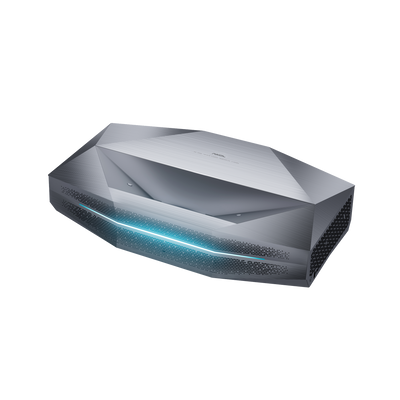
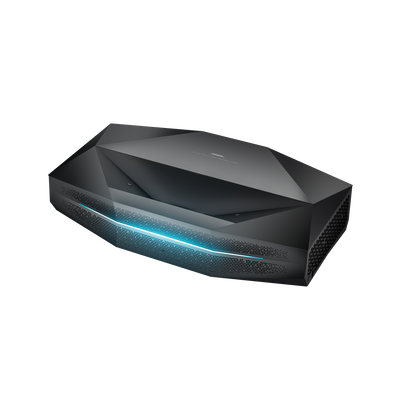
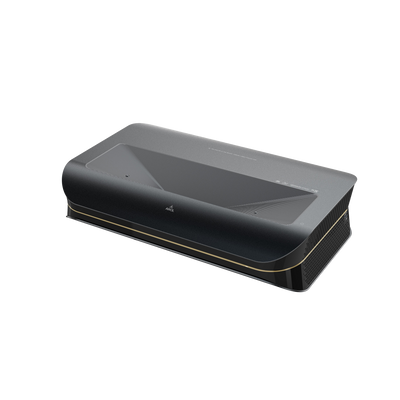
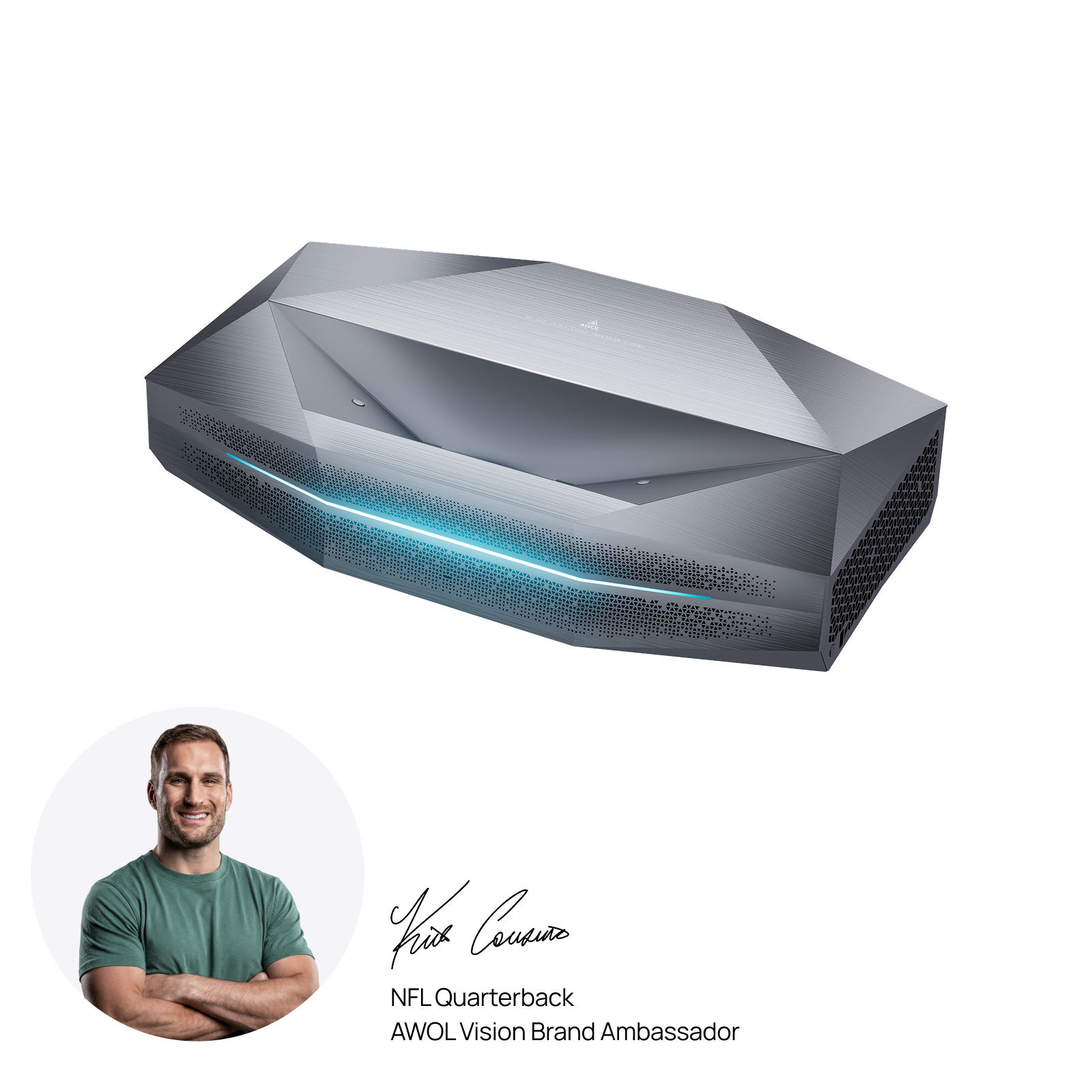
Projectors like the AWOL Aetherion Max include a built-in RGB Music LED Atmosphere Lamp that reacts to audio and video content in real-time. Driven by the projector's internal processor, this native feature eliminates the need for external splitters, LED strip mounting, or app configuration, offering immediate cinematic ambiance with zero setup friction.
How to Choose the Right Color Temperature for Home Theater Lights
Correlated Color Temperature (CCT), measured in Kelvin (K), dictates the thermodynamic hue of the light emitted and plays a profound role in establishing the psychological mood of your space.
- Warm White (2700K–3000K): Highly recommended for dedicated theaters. This spectrum promotes relaxation, mimics the luxurious glow of classic incandescent theater lighting, and avoids the clinical harshness that can ruin the relaxing nature of media consumption.
- Neutral White (3500K–4000K): Ideal for multi-purpose media rooms and living rooms, balancing relaxed viewing with functional, everyday brightness.
- Daylight (6500K / D65): This should be used strictly for bias lighting located immediately behind your display. It matches the standard cinematic white point and prevents subjective color shifting on the screen.
- Cool White (5000K+): Avoid this for primary theater lighting, as the heavy concentration of blue wavelengths suppresses melatonin and induces alertness, creating a sterile environment.
Bringing It All Together
Great home theater LED lighting is definitively not about flooding a room with more light; it is an applied science focused on implementing the right layers, selecting the appropriate color temperature, and utilizing precise control mechanisms. By balancing dimmable ambient downlights, strategic task illumination, and dynamic accent features like bias lighting, a visually flat room is transformed into a deeply immersive cinematic environment. As the industry continues to evolve, the reliance on convoluted external hubs is gradually being supplanted by modern setups that integrate sophisticated, reactive lighting directly into the core audiovisual hardware.
Frequently Asked Questions
Are HID light bulbs used in home theater projectors?
No—modern high-performance projectors use solid-state laser or LED light sources. HID (High-Intensity Discharge) lamps were traditionally used in older DLP and LCD projectors but have been largely replaced due to their significantly shorter lifespan, high heat generation, and the mandatory warm-up time required to reach peak brightness.
How do modern projectors integrate home theater LED lighting features?
A: Some modern laser projectors are now engineered to include integrated home theater lights directly within their chassis. The AWOL Aetherion, for example, includes an RGB Music LED Atmosphere Lamp built directly into the unit that reacts to content in real-time. This provides an immersive lighting setup with no separate hardware required.
What is the best home theater LED lighting setup for movie nights?
A structured, layered approach works best for home theater lights. This includes deep-baffled, dimmable recessed ambient lighting to prevent screen glare, LED bias lighting placed 2–6 inches behind the screen to reduce eye strain, and low-level accent or path lighting. This creates the ultimate cinematic lighting experience while preserving night vision.
What color temperature is best for home theater lights?
2700K–3000K (warm white) is ideal for general ambient and accent layers within the room, creating a relaxed, cinematic mood. The exception is bias lighting located directly behind the screen, which should be set to 6500K to match the display's calibration.
How do you install home movie theater lighting for optimal immersion?
To install home movie theater lighting effectively, start by separating your fixtures into dedicated zones (ambient, task, and accent) on separate smart dimmers. Place bias lighting 2–6 inches behind your screen, angle recessed ceiling lights strictly downward to avoid glare, and conceal pathway LED strips under baseboards or seating. Using dedicated home theater lights in this layered configuration maximizes both visual comfort and cinematic impact.
Be the First to Know
Subscribe for special deals, news, and important product information, and get your exclusive $100 discount.
Related Articles
Playing PS4 on a Projector: Setup, Settings, and Better Gaming
7 Basement Home Theater Ideas with a Style of Their Own
Projector Screen Paint: Is It Worth Painting Your Wall?
A Projector in an Apartment: Make Room for the Screen, Not a Theater
Small Man Cave Ideas: 10 Activity-Based Setups for Limited Space