









































eARC vs. ARC: Do You Really Need the Upgrade for Your Home Theater?
If you’ve ever peeked behind your TV or projector to plug in a new device, you’ve likely noticed an HDMI port labeled "ARC" or, on newer models, "eARC." It’s easy to ignore these acronyms and just plug the cable in where it fits, but if you care about sound quality, that little "e" makes a massive difference.
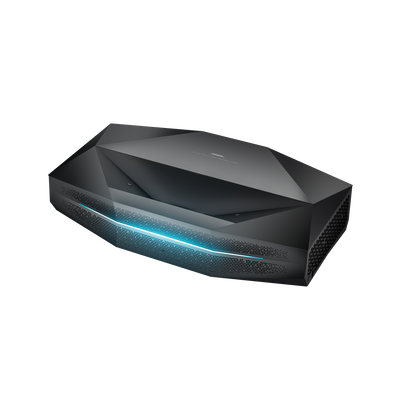
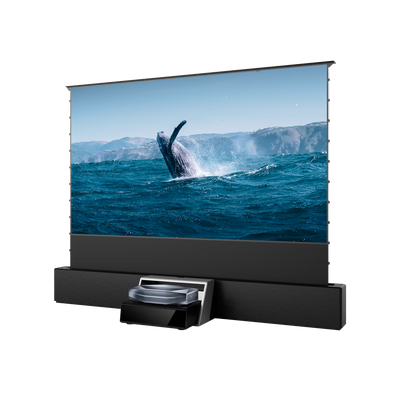
For home theater enthusiasts building a setup around a high-end display—like a laser UST projector—the visual experience is usually breathtaking. But does your audio match the scale of the picture?
Here is the straightforward guide to understanding eARC vs. ARC, how they differ, and whether you actually need to upgrade your gear to get the cinematic sound you paid for.
The Quick Answer: What is the Main Difference?
ARC stands for Audio Return Channel, and eARC stands for Enhanced Audio Return Channel.
While both allow you to send audio from your TV or projector down to your sound system (soundbar or receiver) using a single HDMI cable, the difference lies in bandwidth.
Think of ARC like a standard garden hose. It can carry a decent amount of water (audio data), but if you try to force a massive volume through it, it backs up. It simply cannot handle the heavy data flow of modern, uncompressed movie soundtracks.
eARC is like a fire hose. It was introduced alongside the differences between HDMI 2.0 and HDMI 2.1, offering a massive increase in speed and capacity.
|
Feature |
ARC (Standard) |
eARC (Enhanced) |
|
Bandwidth |
~1 Mbps |
~37 Mbps |
|
Audio Quality |
Compressed (Lossy) |
Uncompressed (Lossless) |
|
Channels |
Compressed 5.1 |
Uncompressed 5.1, 7.1, & 32-channel audio |
|
HDMI Version |
HDMI 1.4 / 2.0 |
HDMI 2.1 |
Diving Deeper: Audio Quality and Formats
The bandwidth numbers look impressive on paper, but what do they actually mean for your ears?
Lossy vs. Lossless Audio
ARC is limited to "Lossy" audio. To fit 5.1 surround sound through that "garden hose" pipe, the audio signal has to be compressed. Data is discarded to make the file smaller. This is the standard format used by most streaming apps and older DVDs (Dolby Digital, DTS).
eARC supports "Lossless" audio. Because the pipe is so big, no compression is needed. You hear the audio exactly as the sound engineers mixed it in the studio. This supports high-bitrate formats like Dolby TrueHD and DTS-HD Master Audio, which are standard on 4K Blu-ray discs.
The Dolby Atmos Confusion
This is the most common point of confusion we see. You might ask, "Can I get Dolby Atmos on standard ARC?"
The answer is yes, but with a catch.
Standard ARC can transmit Dolby Atmos, but it does so by wrapping it inside a compressed format called Dolby Digital Plus. This is how services like Netflix and Disney+ deliver Atmos. It sounds good, but it isn’t the full-bandwidth version.
If you want the full, uncompressed "cinema-quality" experience—often called TrueHD Atmos—you simply cannot get it without eARC. If you are debating is Dolby Atmos worth it for your home theater, knowing which version you are actually hearing is step one.
Do I Need eARC? (User Scenarios)
Not everyone needs the "fire hose." Depending on how you use your entertainment system, standard ARC might be perfectly fine.
For the Casual Streamer
If your movie nights consist exclusively of streaming Netflix, Hulu, or Prime Video directly from smart apps, standard ARC is sufficient. Streaming services currently compress their audio to save bandwidth anyway, so eARC won't magically make Netflix sound better.
For the Gamer & Home Theater Enthusiast
If you own a PS5, Xbox Series X, or a dedicated 4K Blu-ray player, eARC is essential. These devices output massive amounts of uncompressed audio data. Without eARC, your system will be forced to downgrade that high-quality signal into a lower-quality format to make it fit.
For the Big Screen Owner
When you have a 120-inch screen—typical of an AWOL Vision UST setup—immersion is everything. A massive visual image feels disjointed if the sound is thin or compressed. eARC ensures your audio soundstage is as expansive and detailed as the image on your screen.
Compatibility: Can I Mix and Match?
Will an eARC Soundbar Work with an ARC Projector?
Yes, it will work. Both standards are backward compatible. However, your system will always default to the lowest common denominator. If you plug a high-end eARC soundbar into an older ARC TV, you will be limited to standard ARC speeds.
Do I Need Special HDMI Cables?

You might. Because eARC requires much higher bandwidth (up to 37 Mbps for audio alone), old cables can cause dropouts or handshake issues. To guarantee stability, you should look for cables labeled "Ultra High Speed" or "HDMI 2.1."
For example, the AWOL Vision 8K Ultra High Speed HDMI Cable is fully HDMI 2.1 certified. Using a certified cable like this ensures your setup can handle the full 48Gbps data load required for stable eARC audio and lag-free 4K/8K gaming.
When researching the types of HDMI cables, ensure you are buying one certified for these speeds if you plan to use full eARC features.
The Hidden Benefit: Mandatory Lip-Sync Correction
Have you ever watched a movie where the actor’s lips move a fraction of a second before or after the voice? It’s incredibly distracting.
This "lip-sync" error often happens because modern TVs and projectors do a lot of heavy video processing, which takes time. Meanwhile, the audio system processes the sound instantly, causing a mismatch.
In the old ARC standard, lip-sync correction was optional—meaning manufacturers could implement it, but often did so poorly. Under eARC, this correction is mandatory. The projector and soundbar must communicate to perfectly align the audio and video, reducing the need for you to fiddle with "audio delay" sliders or worry about input lag.
Setting Up Your eARC Connection
Getting eARC to work isn't always plug-and-play. You need to ensure both ends of the chain are shaking hands correctly.
- Check Your Ports: eARC is usually only supported on one specific HDMI port on your display. It will be clearly labeled "eARC/ARC."
- Use the Right Gear: Whether you are deciding between a soundbar vs. speakers, ensure the receiver or bar specifically lists "eARC" in the specs.
- Enable it in Settings: Go to your projector or TV’s sound settings. Look for "HDMI-CEC" or "eARC" and ensure it is toggled "ON."
- Audio Output Settings: For the best quality, set your audio output to "Passthrough" or "Bitstream." This tells your display to send the raw audio data to your sound system to decode, rather than trying to process it itself.
For a deeper dive on the physical setup, check our guide on connecting a soundbar to your 4K projector.
Final Thoughts
eARC is not just a marketing buzzword; it is a necessary bridge for modern, high-bandwidth home entertainment. While casual streamers can get by with standard ARC, anyone investing in a premium visual experience—like a laser projector setup—owes it to themselves to unlock the full potential of their audio system.
Don't let an old cable or a wrong setting bottle-neck your movie night. Check your ports, upgrade your cable if necessary, and enjoy the lossless sound your theater was built for.
FAQ: Common Questions About eARC and ARC
Can I use an eARC soundbar with an ARC TV?
Yes, you can connect an eARC soundbar to an ARC TV. They are backward compatible. However, you will not get eARC benefits; the audio transmission will be limited to the standard ARC bandwidth (compressed audio).
Does eARC improve picture quality?
No, eARC (Enhanced Audio Return Channel) is strictly for audio transmission. It does not affect video resolution or color. However, it is often found on HDMI 2.1 ports, which do support higher video resolutions like 4K/120Hz or 8K.
Is eARC necessary for Dolby Atmos?
Not strictly. You can get compressed Dolby Atmos (via Dolby Digital Plus) over standard ARC. However, if you want uncompressed, high-quality Dolby Atmos (TrueHD)—which is common on Blu-ray discs—you absolutely need eARC.
Be the First to Know
Subscribe for special deals, news, and important product information, and get your exclusive $100 discount.
Related Articles

A Projector in an Apartment: Make Room for the Screen, Not a Theater
Projector Says No Signal? How to Find and Fix the Problem

Small Man Cave Ideas: 10 Activity-Based Setups for Limited Space

Why Is My Projector Blurry? 8 Causes and the Fixes That Work
Frame TV Alternative: A Smarter Vision for the Living Room